Quick answer: A quilt block is a single repeating unit, often a square, pieced from smaller fabric shapes, that gets sewn together with matching blocks to form a full quilt top. Classic blocks range from simple grids to more complex pieced designs.
Quilt block patterns form the fundamental building vocabulary of pieced quilting, and understanding how they work gives you a much clearer sense of how a finished quilt actually comes together from a collection of individually sewn units rather than one continuous, undivided piecing task tackled all in a single sitting. Rather than piecing an entire quilt top as one continuous process, most pieced quilts are built from repeating blocks, sewn individually and then assembled together into rows and columns to form the complete top layer of the finished piece. Learning to recognize and understand common block patterns makes reading new patterns considerably easier, since many designs are built from variations on the same foundational structures you’ll encounter again and again across different quilts and different pattern designers over the years. This guide covers what a quilt block actually is, classic block patterns worth learning first, the difference between simple and complex block construction, choosing blocks by skill level, mixing multiple block patterns in one quilt, and sizing blocks to fit your intended finished quilt dimensions. At Bee’s Quilt Shop, block-based thinking is one of the most useful mental frameworks we encourage newer quilters to develop early on, since it makes even an ambitious project feel achievable one manageable block at a time rather than one overwhelming whole.
What A Quilt Block Actually Is
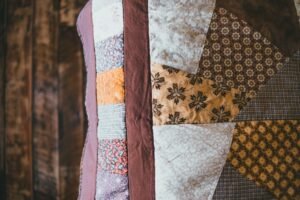
A quilt block is a single, usually square, repeating unit pieced from smaller fabric shapes, designed to be sewn together with identical or coordinating blocks to build up the full quilt top from many smaller repeated pieces. Thinking of a quilt as a grid of individual blocks, rather than one enormous, undifferentiated piecing project, makes even a large quilt feel far more manageable, since you’re really just repeating the same smaller task multiple times rather than tackling one massive continuous effort all at once without a natural break in between. Most blocks finish to a standard size, commonly somewhere between 6 and 16 inches, which makes them easy to combine with other blocks of the same finished size within a single project or a mixed sampler quilt. Working on one block at a time also makes a project easier to fit into short, available windows of sewing time rather than requiring one long, uninterrupted session at your machine.
Classic Block Patterns Every Quilter Should Know
Certain classic block patterns show up so frequently across quilting patterns that learning them early gives you a genuine head start on reading and understanding new designs you encounter later on in your own quilting journey. The nine patch block, built from a simple three-by-three grid of squares, is often the very first block new quilters learn, since it requires only straight seams and basic piecing accuracy to complete successfully without needing advanced skills yet. The log cabin block, built around a central square surrounded by progressively larger strips, teaches strip piecing and value placement in a way that translates directly to many other block designs found throughout traditional and modern quilting alike. The pinwheel block, built from half-square triangles arranged to create visual movement, introduces triangle piecing in a manageable, approachable format that builds directly on nine patch skills already comfortably learned. The flying geese unit, though technically a smaller component rather than a full block on its own, appears inside countless other block designs and is well worth learning early for that reason alone before tackling more visually complex patterns later.
Simple Vs Complex Block Construction
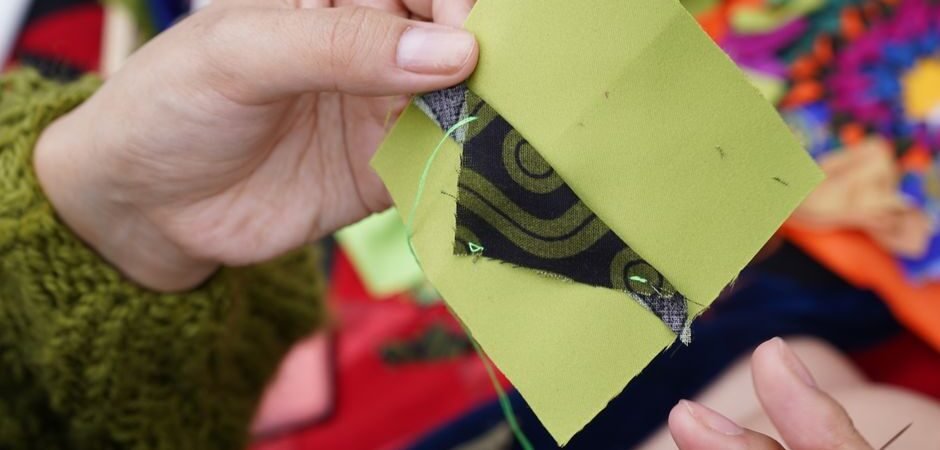
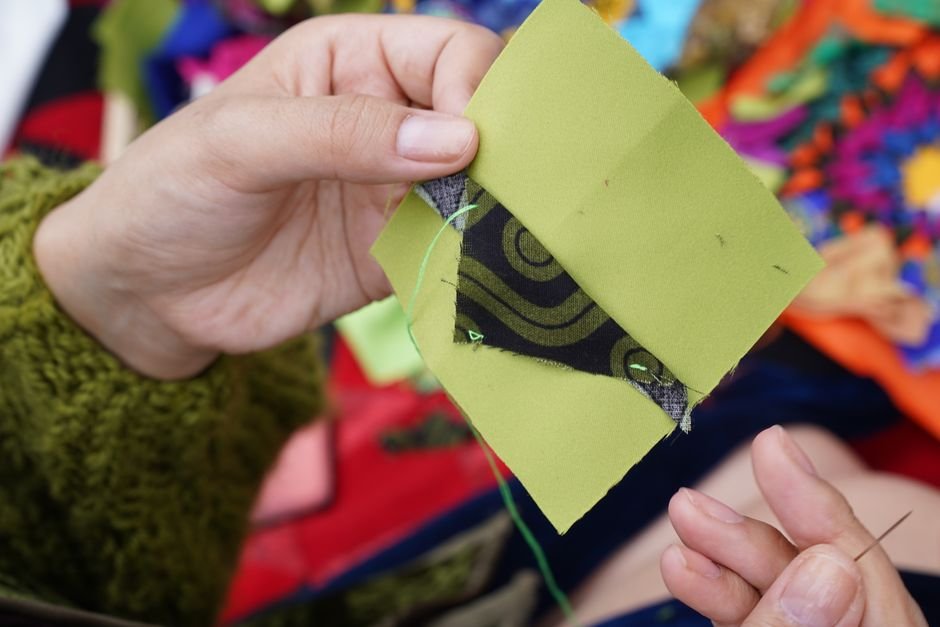
The difference between simple and complex block construction generally comes down to the piecing techniques a specific block demands rather than the sheer number of pieces alone contained within that block. Simple blocks rely entirely on straight seams sewn edge to edge, tolerating minor inaccuracies without dramatically affecting the finished result once everything is assembled together into completed rows. Complex blocks introduce techniques like curved seams, set-in pieces where three seams meet at a single point, or foundation paper piecing for very small or oddly shaped pieces, all of which demand considerably more precision and practice to execute cleanly and consistently across multiple repeated blocks in a single finished quilt.
Choosing Blocks By Skill Level
Choosing blocks appropriate to your current skill level, rather than the most visually striking option you’ve seen online or in a glossy magazine, leads to a far more enjoyable and successful piecing experience overall from start to finish. Beginners generally do best starting with blocks built entirely from squares and straight seams, gradually introducing half-square triangles once basic accuracy feels comfortable and consistent across several practice blocks made from scrap fabric first. More experienced quilters can confidently take on blocks involving curved piecing or set-in seams, having already built the foundational accuracy those more advanced techniques depend on through earlier, simpler projects completed successfully over time.
Mixing Multiple Block Patterns In One Quilt
Mixing multiple block patterns within a single quilt, often called a sampler quilt, offers a rewarding way to practice several techniques within one cohesive project rather than committing an entire quilt to a single repeated block design throughout. The key requirement for successfully mixing blocks is ensuring every block finishes to the exact same overall size, regardless of how different their internal piecing looks, so they assemble together cleanly into consistent rows and columns without any gaps or overlaps at the seams. This size consistency requirement is worth double-checking carefully after piecing each block, before moving on to the next one in your stack, rather than discovering a frustrating sizing mismatch only after every block is already finished and ready for assembly into the top.

Sizing Blocks To Fit Your Finished Quilt
Sizing blocks appropriately to fit your intended finished quilt dimensions involves working backward from your target size through some straightforward math anyone can follow with a bit of patience and a basic calculator. Decide on your desired finished quilt dimensions first, then divide by your chosen block size to determine how many blocks per row and column you’ll need, adjusting either the block size or the block count until the math produces a clean, workable grid that fits together evenly without any awkward partial blocks. Adding borders after the pieced blocks are assembled gives you additional flexibility to fine-tune the final size without needing the block grid itself to land on an exact dimension, which takes some of the pressure off getting the block math perfectly precise from the very earliest stage of planning your project. Sashing strips between blocks offer another useful adjustment tool, letting you add a few extra inches to the overall top without changing the block count or size at all. Working through this math on paper before cutting any fabric, rather than adjusting on the fly mid-project, catches sizing problems while they’re still cheap and easy to fix with nothing more than an eraser. Graph paper or a simple quilt-design app can make this planning stage considerably faster and more visual than working purely from written numbers, letting you actually see the proposed layout before committing any fabric to it. Many experienced quilters keep a small notebook of successful block-and-size combinations they’ve used before, which speeds up planning noticeably on every future project that reuses a familiar block they already know well. This kind of reference material becomes especially valuable when a quilter wants to resize a favorite pattern for a different bed size or gift recipient without redoing all the underlying math from scratch each time. Over the years, a well-kept notebook like this often becomes just as valuable to a quilter as their actual collection of printed patterns, since it captures decisions and lessons a printed pattern never includes. Sharing this kind of personal reference with a newer quilter in your circle, whether a family member or a fellow guild member just starting out, is also a genuinely generous way to pass along hard-won, practical knowledge that would otherwise take a newer quilter years of repeated trial and error, and more than a few genuinely frustrating mistakes along the way, to accumulate entirely on their own without any outside help.
Ready to try your first quilt block pattern? Browse our Quilt Patterns and Blocks guides for more design ideas, or explore our Patterns collection to see what’s currently available.
Frequently Asked Questions
What exactly is a quilt block?
A quilt block is a single repeating unit, usually square, pieced from smaller fabric shapes, that gets repeated and sewn together with matching blocks to form the quilt top.
What are some classic block patterns to learn first?
Nine patch, log cabin, and pinwheel blocks are popular starting points since they use straightforward piecing without curved seams or set-in points.
What makes a block “complex” to piece?
Complexity usually comes from curved seams, set-in pieces, or a high number of small pieces per block, all of which require more precision to keep seams accurate.
Can I mix multiple block patterns in one quilt?
Yes, sampler-style quilts specifically combine multiple different block patterns, as long as all blocks are finished to the same overall size before assembly.
How do I make sure blocks fit my desired quilt size?
Calculate finished block size against your target quilt dimensions first, then adjust the number of blocks per row and column, or add borders to reach the size you want.
This article is intended for general educational and informational purposes only, based on common quilting practices. Block sizing and construction methods vary by pattern designer. Bee’s Quilt Shop shares this guide as part of our ongoing library of quilting and sewing resources.