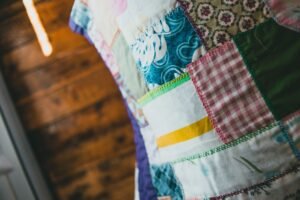
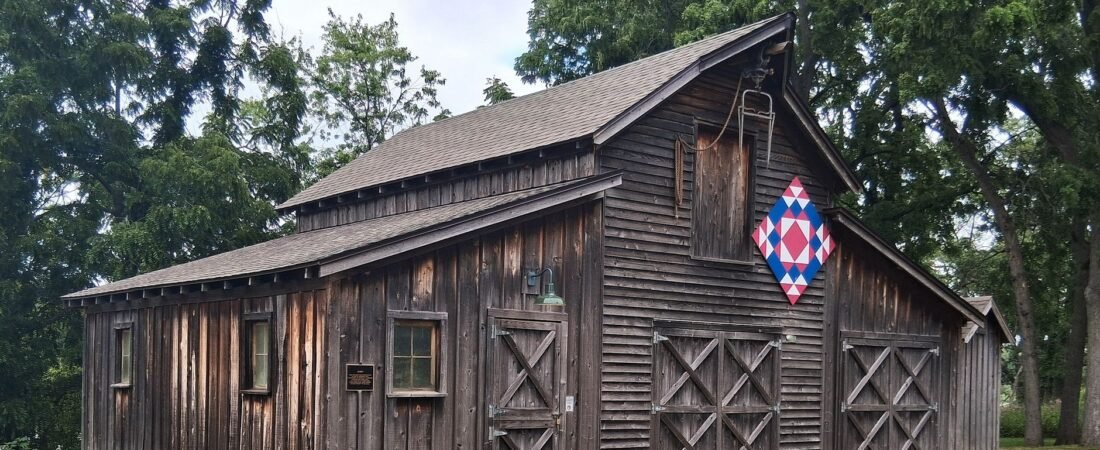
Quick answer: A barn quilt is a large, painted wooden panel displaying a geometric design borrowed directly from traditional quilt block patterns, mounted outdoors on a barn or outbuilding as folk art. Choosing a simple, straight-lined design, masking carefully with painter’s tape, and sealing the finished panel are what produce clean results that hold up outdoors for years.
Barn quilt patterns bring the bold geometry of traditional quilt blocks out of the sewing room entirely, translating pieced designs into large, painted panels displayed outdoors on barns, sheds, and fences across the countryside. If you’ve driven through a rural area and spotted a colorful, geometric square mounted high on a barn wall, you’ve likely seen a barn quilt, a genuinely unique folk art tradition that borrows its visual language directly from quilting. This guide covers what a barn quilt actually is, popular pattern designs, choosing a pattern for your skill level, the materials a project requires, painting techniques for clean lines, and how to display and weatherproof a finished piece. Bee’s Quilt Shop has seen interest in barn quilts grow among quilters looking for a project that lives outdoors rather than on a bed, and the short version is that the quilting knowledge you already have translates surprisingly directly into this painted format. Barn quilt trails have also become a genuine tourism draw in a number of rural counties, with printed maps and driving routes guiding visitors past dozens of installed panels, which has helped introduce the tradition to plenty of people who had never encountered a pieced quilt block before seeing one painted large on a barn wall.
What A Barn Quilt Is
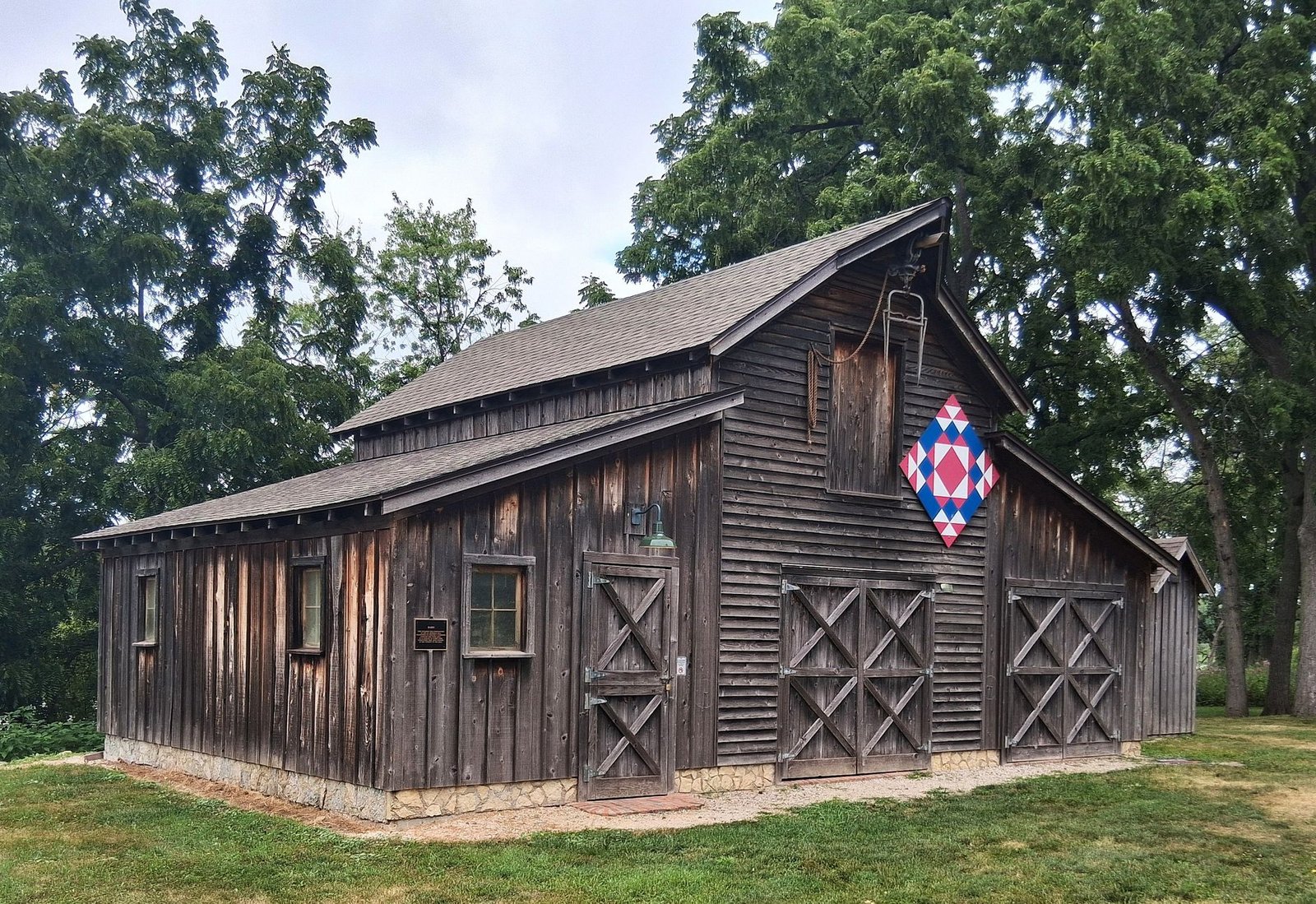
A barn quilt is a large, painted wooden panel, typically square, displaying a geometric design directly inspired by traditional pieced quilt block patterns, mounted on the exterior of a barn or other outbuilding as a form of rural folk art. The tradition traces back to organized barn quilt trails that began appearing across parts of the rural United States in the early two thousands, where communities collaborated to install painted quilt block panels along a driving route, celebrating both quilting heritage and the agricultural landscape those barns sit within. Unlike a sewn quilt, a barn quilt is painted rather than pieced, but the design itself is deliberately drawn straight from recognizable quilt block patterns, meaning quilters often recognize a barn quilt’s underlying block immediately even though it’s rendered in paint on wood rather than in pieced fabric. The scale is dramatically different too, a barn quilt panel is typically somewhere between four and eight feet square, meant to be visible and legible from a considerable distance, unlike a quilt block meant to be viewed up close.
Popular Barn Quilt Pattern Designs
Certain classic geometric quilt block designs translate especially well into barn quilt format, and a handful show up again and again across established barn quilt trails. The log cabin block, with its strong concentric structure built from strips arranged around a central square, reads clearly and boldly even at a large scale and from a distance. Star block variations, including simple eight-pointed stars and more elaborate variations, are hugely popular for barn quilts since their symmetrical, radiating structure creates real visual impact on a large panel. Simpler blocks like the pinwheel or the classic nine-patch also appear frequently, particularly for a first barn quilt project, since their more straightforward geometry is considerably easier to translate accurately from a small paper sketch up to a full-scale painted panel.
Choosing A Pattern For Your Skill Level
Choosing a pattern for your skill level with a barn quilt project comes down to honestly assessing both painting and layout complexity, since barn quilts genuinely combine two different skill sets that a purely sewn quilt doesn’t require in the same way. Fewer overall pieces and simpler, larger geometric shapes translate more forgivingly to a large painted format than a design with many small, intricate elements, since fine detail that reads clearly in fabric can become genuinely difficult to paint cleanly at barn quilt scale. Straight lines and basic geometric shapes, squares, triangles, and simple stars, are considerably more manageable for a first barn quilt than a pattern involving curves, since achieving clean curved lines with painter’s tape and paint is a noticeably harder technical skill than masking off straight edges. For a first attempt, most experienced barn quilt painters recommend starting with a design using no more than four to six colors and straightforward geometric shapes, saving more elaborate, multi-color designs for a second or third project once the basic process feels comfortable.
Materials Needed For A Barn Quilt Project
A barn quilt project requires a fairly specific materials list, different in several ways from typical quilting or sewing supplies. Exterior grade plywood or MDO board, a weather-resistant plywood specifically designed for outdoor sign-making, forms the base panel, chosen for its ability to withstand ongoing outdoor exposure without warping or deteriorating quickly. Exterior latex paint, the same type used for house siding or outdoor trim, provides the actual color and pattern, chosen specifically for its durability and fade resistance compared to interior paint formulations. Layout tools, a measuring tape, a large square or straightedge, and painter’s tape for masking off geometric sections, replace the rulers and rotary cutters used in fabric piecing, though the underlying math of dividing a square into an accurate geometric pattern works the same way regardless of the final medium.
Painting Techniques For Crisp Geometric Lines
Achieving crisp, clean geometric lines on a barn quilt panel comes down largely to careful masking and patient layering, much like achieving accurate piecing in fabric relies on careful cutting and consistent seam allowances. Measuring and marking the full design accurately on the panel before any paint goes on is the essential first step, since an error at the layout stage will show up clearly once paint is applied and much harder to correct afterward. Applying painter’s tape firmly along every marked line, pressing it down completely to prevent paint from bleeding underneath, is what actually produces the crisp edges barn quilts are known for, and taking the extra time to burnish tape edges down thoroughly pays off directly in line quality. Painting in thin, even layers rather than one thick coat, letting each layer dry fully before adding the next, produces more even coverage and reduces the risk of paint pooling or dripping under the taped edges, a genuinely common source of blurred lines for first-time barn quilt painters.
Displaying And Weatherproofing A Finished Barn Quilt
Once painted, a barn quilt needs a bit of additional weatherproofing and secure mounting before it’s ready for permanent outdoor display. A clear exterior sealant or topcoat, applied over the fully dried and cured paint, adds an extra layer of UV and moisture protection that significantly extends how long the colors stay vibrant against ongoing sun and weather exposure. Mounting hardware needs to be genuinely rated for the panel’s weight and for permanent outdoor use, since a barn quilt panel is both heavier and more exposed to wind load than typical wall art, and securing it with appropriate exterior-rated screws or brackets directly into solid structural framing, rather than just the barn’s siding, keeps it securely in place through seasonal weather. Even with careful weatherproofing, most barn quilts benefit from a fresh coat of sealant every several years, so it’s worth thinking of a finished panel as a piece that needs occasional maintenance to look its best over the long stretch of years most barn quilts are meant to last outdoors. Checking on a panel after severe weather, a hard freeze, a hailstorm, or an especially harsh summer stretch, is a reasonable habit too, catching a small crack in the sealant or a loosening mounting bracket early is far easier to address than dealing with more significant paint or panel damage later. Some barn quilt trail organizers keep a simple maintenance log for community-installed panels, and adopting that same habit for a personal panel, even just a note on the calendar each spring, helps keep upkeep from slipping through the cracks year after year. Photographing a finished panel right after installation, and again at each seasonal check, gives a useful before-and-after record for spotting fading or wear early, well before it becomes obvious from a normal viewing distance on the road. This small habit costs almost nothing in time but pays off considerably over the years a well-built panel is expected to last.
Curious how quilting inspires outdoor folk art? Browse our Fabric Guides here at Bee’s Quilt Shop for more quilting history, and check out our patchwork quilt guide to see where these painted designs originally came from. Explore more Quilt Patterns & Blocks guides on the blog, or browse our Patterns collection to see what is currently available.
Frequently Asked Questions
What is a barn quilt made of?
Exterior grade plywood or MDO board forms the base panel, chosen for its ability to withstand outdoor exposure without warping, and it is painted with exterior latex paint for durability and fade resistance.
What is a good beginner barn quilt design?
A design using no more than four to six colors and straightforward geometric shapes, like a pinwheel or nine-patch, is generally recommended for a first attempt, saving more elaborate multi-color designs for later.
How do I get clean lines when painting a barn quilt?
Applying painter’s tape firmly along every marked line and pressing it down completely to prevent bleeding is what produces crisp edges. Painting in thin, even layers rather than one thick coat also reduces the risk of paint pooling under the tape.
How long does a painted barn quilt last outdoors?
A clear exterior sealant applied over the fully cured paint significantly extends how long the colors stay vibrant, though most barn quilts benefit from a fresh coat of sealant every several years.
What size is a typical barn quilt panel?
A barn quilt panel is typically somewhere between four and eight feet square, meant to be visible and legible from a considerable distance. At Bee’s Quilt Shop, we think that scale is part of what makes the tradition so striking against a rural landscape.
This article is intended for general educational and informational purposes only, based on common barn quilt trail practices. Results vary by materials, paint, and outdoor conditions, so checking manufacturer instructions for exterior paint and sealant is always recommended. Bee’s Quilt Shop shares this guide as part of our ongoing library of quilting and sewing resources.