Quick answer: A crazy quilt is pieced from irregular fabric patches sewn together at random angles rather than following a repeating block pattern, a style rooted in Victorian era needlework often finished with heavy embroidery. Modern versions tend to simplify fabric choice and embellishment while keeping that same freeform piecing approach.
A crazy quilt looks like organized chaos at first glance, irregular patches of fabric pieced together at odd angles with no repeating block pattern in sight, and that’s exactly the point. Where most quilting styles build structure from careful geometric repetition, crazy quilting throws that rulebook out entirely in favor of improvisation, texture, and often elaborate embroidery. This guide covers what defines a crazy quilt, how the traditional and modern approaches differ, and how to get started building your own irregular, richly textured piece. Whether you’re drawn to the elaborate Victorian tradition or a simpler modern take on the same freeform idea, crazy quilting offers a genuinely different kind of creative satisfaction than piecing a carefully measured traditional block pattern, and it’s a style that genuinely rewards patience and personality over precision at every single step of the entire creative process from start to finish.
What A Crazy Quilt Is
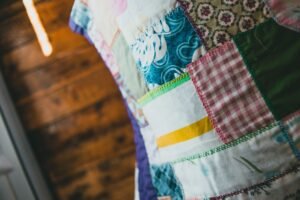
A crazy quilt is defined by its irregular piecing, fabric patches of varying shapes and sizes stitched together edge to edge without any consistent block pattern or repeating unit, which is a genuine departure from most other quilting traditions. This style traces its roots to the Victorian era, when quilters, often working with luxury fabrics like silk, velvet, and brocade rather than everyday cotton, used crazy quilting as a way to showcase fine fabric scraps and elaborate embroidery skills rather than to produce a practical, everyday bedcover. These Victorian crazy quilts were frequently displayed as decorative parlor pieces rather than used for warmth, heavily embellished with embroidery stitches, lace, ribbon, and even beads or buttons, turning the quilt into more of a textile art showcase than a functional blanket. That origin as a display of skill and fabric variety, rather than pure utility, still shapes how a lot of crazy quilters approach the technique today. Many surviving antique crazy quilts also incorporated personal keepsakes, a scrap of a wedding dress, a ribbon from a special event, or fabric printed with a commemorative design, turning each piece into a genuinely personal record rather than just a decorative object.
Traditional Vs Modern Crazy Quilting
Traditional and modern crazy quilting share the same basic irregular piecing foundation but differ quite a bit in execution and intent. Traditional crazy quilting leans heavily into elaborate embroidery, often covering every seam with decorative stitches, and frequently incorporates a wide mix of fabric types and textures, silk alongside velvet alongside cotton, embracing a rich, layered look. Modern crazy quilting tends to simplify this considerably, often sticking to a single fabric type like quilting cotton for easier care and construction, and using embroidery more sparingly as an accent rather than covering every single seam. Some modern quilters also make crazy quilt blocks specifically to combine with more traditional pieced blocks in a single larger quilt, using crazy piecing as one design element among several rather than as the entire quilt’s aesthetic, which is a genuinely different approach from the Victorian tradition of an entirely crazy-pieced surface. This blended approach has become especially popular for sampler-style quilts, where a single crazy-pieced block stands out intentionally among a set of more structured traditional blocks rather than getting lost among several identical ones, giving the whole quilt a genuinely eye-catching focal point without demanding a full crazy-pieced surface spread out across the entire finished quilt top overall.
Fabric Choices For A Crazy Quilt
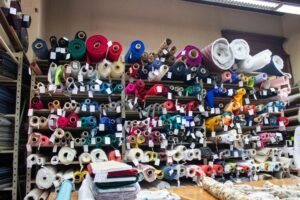
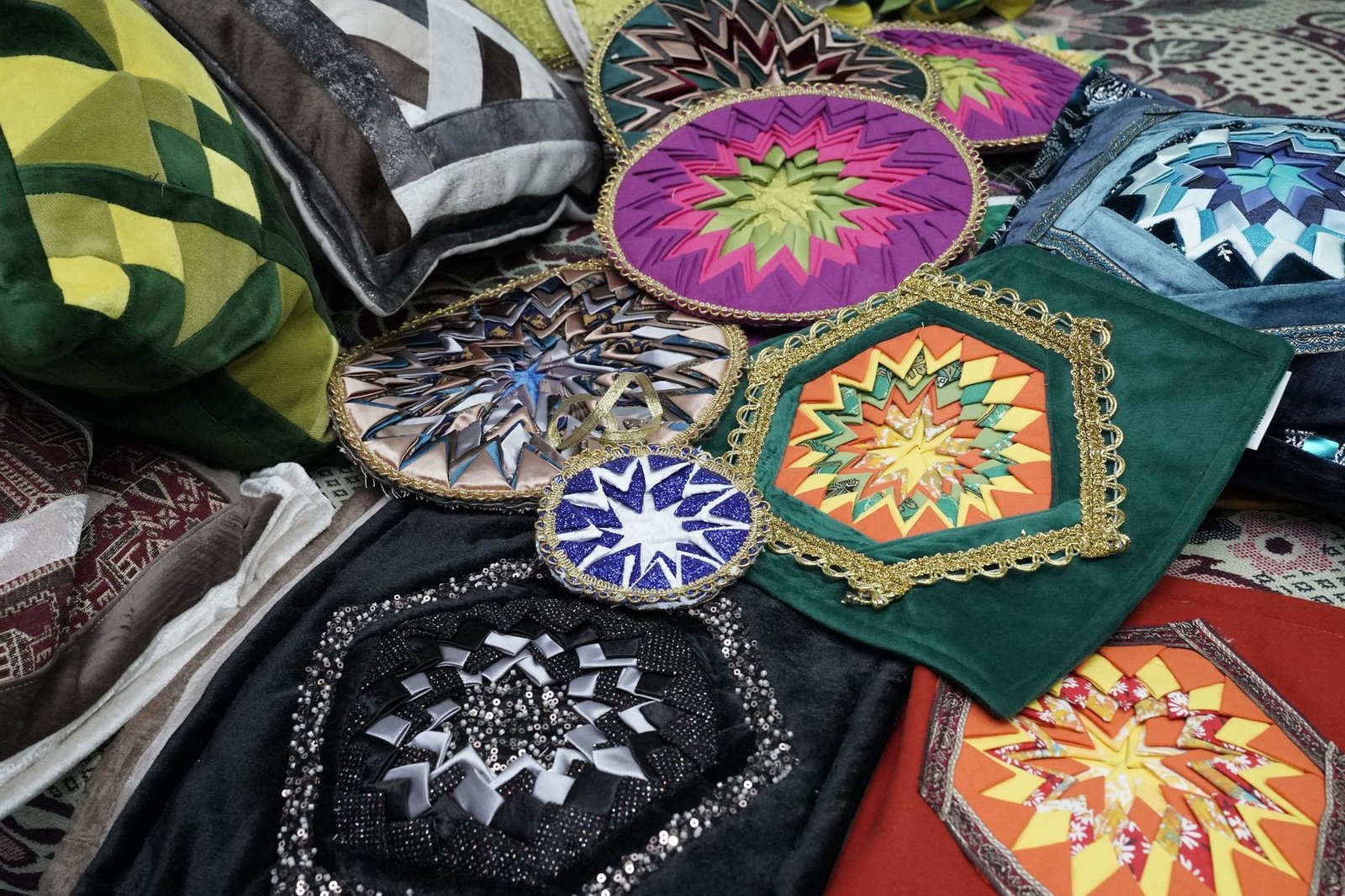
Fabric choices for a crazy quilt carry more creative freedom than almost any other quilting style, since the whole point is combining varied textures and prints rather than coordinating a single cohesive palette the way most quilts do. Mixing weights and textures, cotton alongside silk or a textured blend, adds visual and tactile interest that a crazy quilt specifically invites, though it’s worth considering how different fabric weights will behave together during construction and care, since silk and heavy cotton don’t always wash or wear the same way. Many modern crazy quilters do stick to a single fabric weight, usually quilting cotton, specifically to simplify both construction and future care, trading some of that traditional textural variety for practicality. Scraps left over from other sewing and quilting projects are a genuinely popular fabric source for a crazy quilt specifically, since the style’s inherent variety means a mismatched, oddly-shaped collection of leftovers becomes an asset rather than a limitation. Color coordination still matters even within the chaos, and many successful crazy quilts pick a loose color family or a handful of recurring colors across an otherwise wildly varied set of prints and textures to keep the finished piece feeling intentional rather than random.
Basic Crazy Quilt Construction Approach
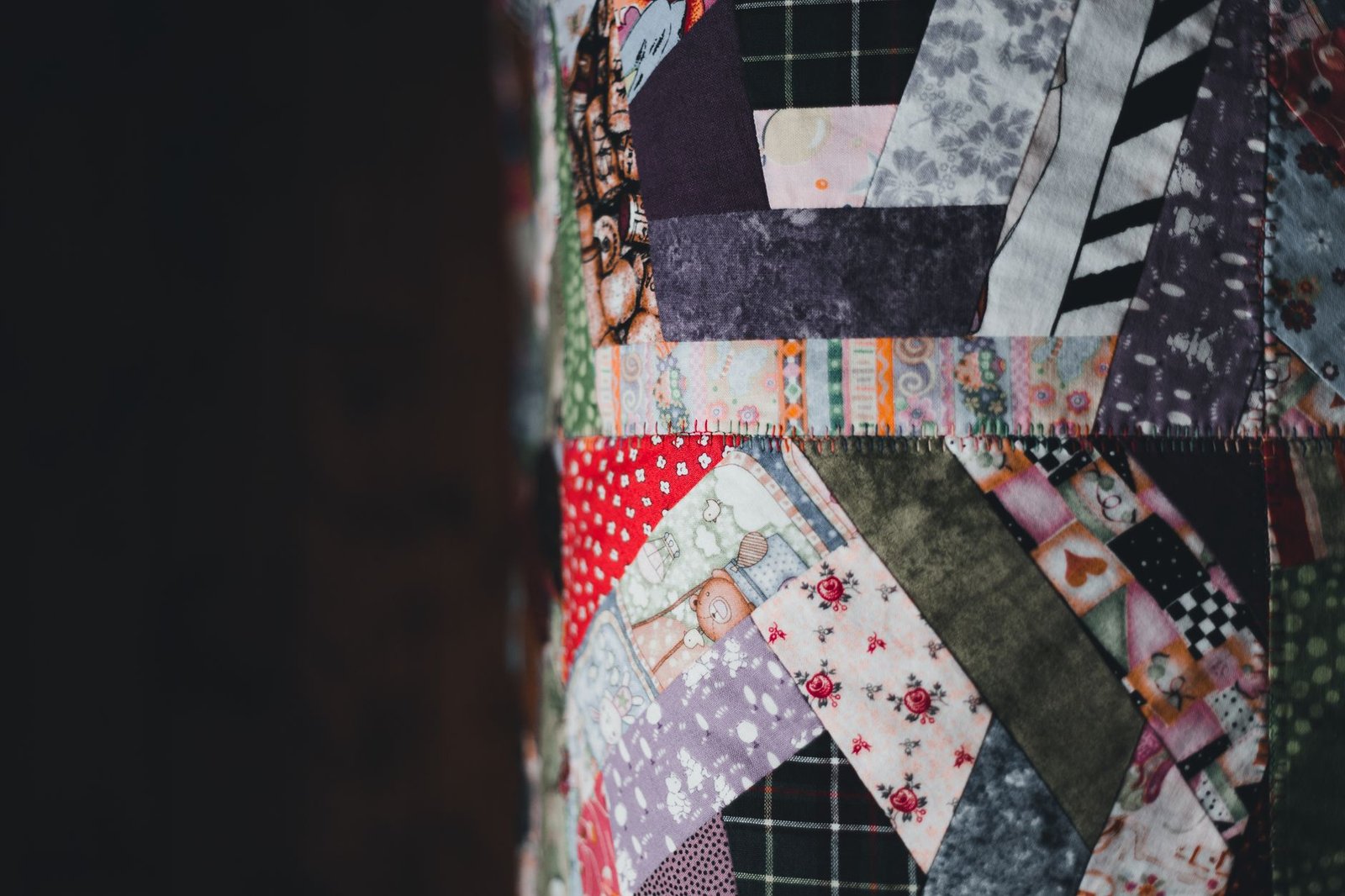
The basic crazy quilt construction approach, at least conceptually, involves piecing irregular fabric shapes directly onto a foundation fabric or paper, building outward from a central starting patch rather than assembling separate pieces and joining them afterward the way most traditional quilt blocks are constructed. Each new fabric piece typically gets laid right sides together against the previous piece, stitched along one edge, then flipped open and pressed flat before the next irregular piece gets added, gradually covering the entire foundation block with no planned pattern beyond keeping edges roughly straight enough to sew. This foundation piecing method is part of why crazy quilting tends to feel more forgiving for improvisation than traditional piecing, since there’s no precise measurement or matching point that needs to line up the way traditional block piecing requires. A foundation square cut a bit larger than your intended finished block, trimmed down evenly once piecing is complete, is a common technique that keeps edges tidy without requiring perfect precision throughout the entire building process.
Embellishment Techniques Common In Crazy Quilting
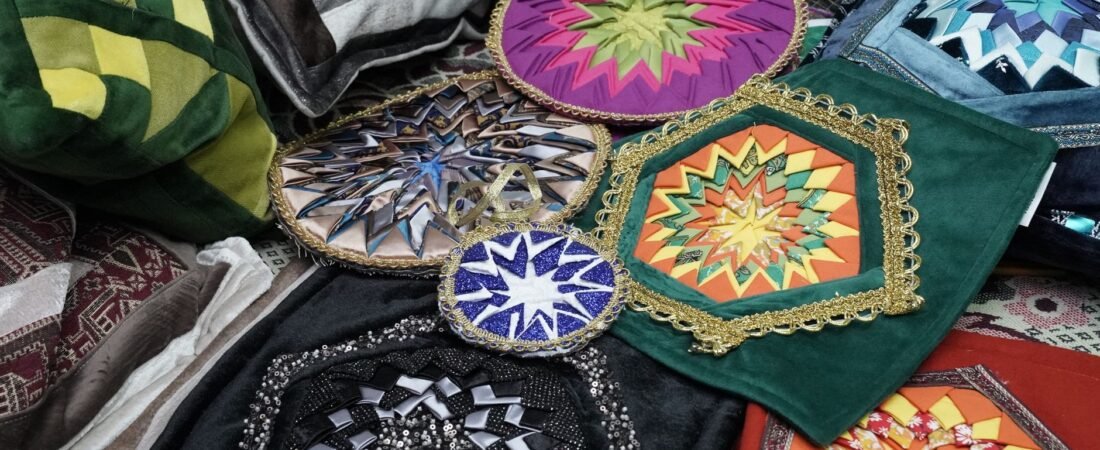
Embellishment techniques are where a lot of the personality and visual richness in crazy quilting really comes through, and this step is often considered as important as the piecing itself. Embroidery stitches along seam lines, ranging from a simple feather stitch to elaborate combinations of several different decorative stitches, are the most traditional and recognizable embellishment, transforming plain seams into a genuine design feature. Lace and trim additions, layered onto or between fabric patches, add dimension and a vintage feel that many crazy quilters specifically chase, especially in pieces meant to echo the Victorian tradition closely. Beads, buttons, and small charms round out the more elaborate embellishment options, though these additions add both time and, for pieces that will actually be handled or washed, some practical consideration about durability that’s worth thinking through before committing to a heavily embellished design. Ribbon embroidery and silk ribbon flowers, worked directly onto the fabric surface rather than simply stitched thread designs, add yet another layer of dimension that many quilters reserve specifically for a crazy quilt’s most decorative focal patches.
Displaying Or Using A Finished Crazy Quilt
Displaying or using a finished crazy quilt often comes down to how heavily it’s been embellished, since delicate additions like lace, beads, or extensive embroidery don’t always hold up well to regular functional use and washing. Many crazy quilts, especially those closely following the traditional heavily embellished style, work best as wall hangings or decorative throws displayed rather than used daily, which protects delicate embellishments from the wear a functional blanket would experience. Simpler, modern crazy quilts made from a single sturdy fabric with lighter embellishment can absolutely function as everyday quilts, especially if embroidery and any added trim are chosen and secured with durability in mind rather than pure decoration. Bee’s Quilt Shop generally suggests deciding early in the planning process whether a crazy quilt is meant to be a functional piece or a decorative showcase, since that decision genuinely shapes fabric and embellishment choices from the very first patch. A backing fabric chosen for durability, along with a sturdy method of securing any beads or trim, can extend the practical lifespan of even a moderately embellished piece well beyond what a purely decorative wall hanging would ever need to withstand, keeping a treasured heirloom piece usable for many years of enjoyment rather than delicate handling alone.
Ready to try a crazy quilt project of your own? Explore our Quilt Patterns and Blocks library here at Bee’s Quilt Shop for more piecing inspiration, and browse our current patterns collection to see what’s currently available. Explore more Quilt Patterns & Blocks guides on the blog, or browse our Patterns collection to see what is currently available.
Frequently Asked Questions
Is a crazy quilt harder to make than a traditional quilt?
It’s actually more forgiving in some ways, since there’s no precise measurement or matching point that needs to line up the way traditional block piecing requires. The irregular piecing style leaves a lot of room for improvisation.
Do I need to know embroidery to make a crazy quilt?
Not necessarily, though embroidery along seam lines is a traditional and popular way to add detail. Bee’s Quilt Shop finds many modern crazy quilters use embroidery sparingly as an accent rather than covering every seam the way Victorian pieces often did.
What fabric works best for a beginner crazy quilt?
Sticking to a single fabric type, usually quilting cotton, simplifies both construction and future care considerably. Mixing fabric weights like silk and cotton adds traditional texture but takes more planning around care and durability.
Can a crazy quilt actually be used as a regular blanket?
It depends on how heavily it’s embellished, simpler crazy quilts made from sturdy fabric with light embellishment can function as everyday quilts. Heavily embellished pieces with lace or beads tend to work better as wall hangings or decorative throws.
How do I keep a crazy quilt from looking too random or messy?
Picking a loose color family or a handful of recurring colors across your varied fabric patches helps keep the finished piece feeling intentional. Many successful crazy quilts embrace irregular shapes while still following some color coordination underneath.
This article is intended for general educational and informational purposes only, based on common quilting practices. Results vary by fabric choice, skill level, and embellishment technique, so testing a small block before committing to a full project is always a good idea. Bee’s Quilt Shop shares this guide as part of our ongoing library of quilting and sewing resources.