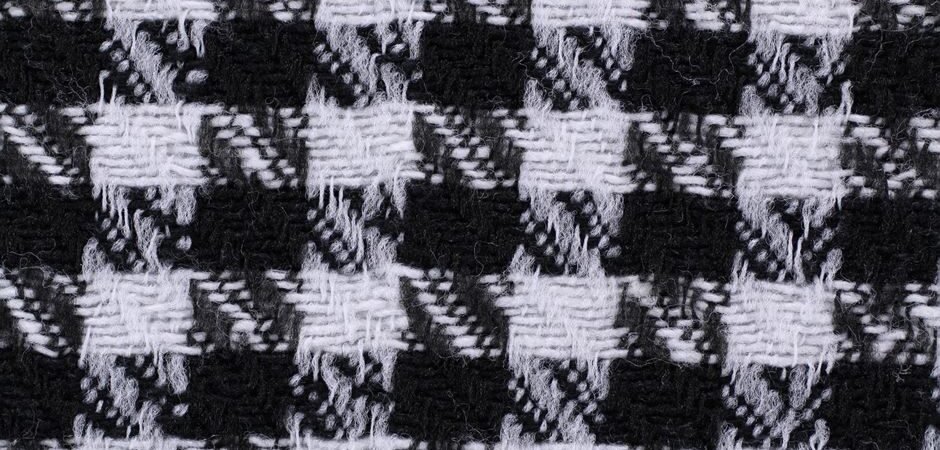
Quick answer: Houndstooth fabric is a woven pattern of small, broken, four-pointed checks traditionally shown in black and white, created through a twill weave rather than printing. Modern versions now come in a wide range of colors and check sizes for both classic and contemporary projects.
Houndstooth fabric has one of those patterns you recognize instantly even if you’ve never known its name, that jagged, broken checkered look that shows up on everything from tweed blazers to throw pillows to the occasional bold quilt block. Houndstooth fabric gets its name from the pattern’s small, irregular four-pointed shapes, said to resemble a dog’s tooth, arranged in a repeating checked structure that reads as far more dynamic than a plain, even check pattern. Unlike gingham’s clean, simple grid, houndstooth’s broken, angular shapes give it a slightly busier, more textured visual energy that’s remained popular across fashion and home decor for well over a century. This guide covers what houndstooth fabric actually is, how the classic black and white version compares to more modern colorways, and how to work it successfully into your own sewing and quilting projects. Bee’s Quilt Shop sees plenty of interest in houndstooth from sewists drawn to its timeless, slightly retro appeal and its surprising versatility across projects.
What Houndstooth Fabric Is
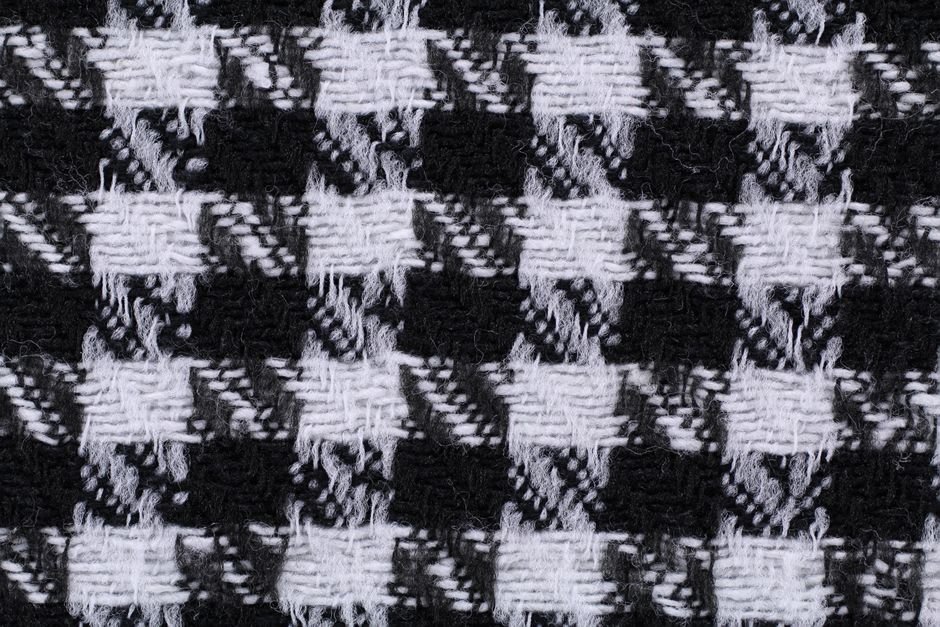
Houndstooth is a woven pattern created using a specific twill weave structure, where the interlacing of dyed and undyed yarns produces those signature broken, jagged checks rather than a smooth, straight-edged square like gingham or a basic plaid. The pattern is traditionally woven rather than printed, meaning the design comes from how the threads themselves are arranged and interlaced, which gives authentic houndstooth fabric a bit more depth, texture, and durability compared to a flat printed imitation. Because of the twill weave underneath the pattern, houndstooth also tends to have a slightly diagonal texture and more body than a plain weave fabric of similar weight, giving it a substantial hand that’s part of why it’s remained such a popular choice for outerwear and tailored pieces. The classic version uses just two colors arranged in that broken-check repeat, and it’s the contrast and scale of those checks, not the specific colors used, that defines houndstooth as a pattern category. Weight and fiber content vary quite a bit across houndstooth fabric too, ranging from lightweight cotton and cotton-blend versions suited to warmer weather garments, to heavier wool and wool-blend tweeds traditionally associated with outerwear, so it’s worth checking a bolt’s fiber content and weight rather than assuming every houndstooth fabric behaves the same way in a project.
Traditional Vs Modern Houndstooth Colors
Traditional houndstooth almost always brings to mind black and white, and that combination remains the most recognizable and classic version of the pattern, closely associated with tailored menswear, tweed jackets, and mid-century fashion. That said, houndstooth has moved well beyond black and white in recent decades, with modern colorways showing up in nearly every palette imaginable, from soft neutrals like camel and cream to bold combinations like navy and mustard or even bright, playful color pairings aimed at a younger or more casual audience. Many quilters and sewists find that a non-traditional colorway houndstooth reads as more contemporary and versatile for projects that don’t call for that classic tailored look, while the black and white version still carries an instantly recognizable, slightly formal association. Scale varies quite a bit too, with some houndstooth prints using tiny, tightly packed checks that read almost like a solid texture from a distance, while others use larger checks that make a much bolder, more graphic statement up close. A related variation sometimes called shepherd’s check uses a similar broken-check structure at a smaller, more even scale, and while purists distinguish it from true houndstooth, the two terms get used somewhat interchangeably in casual shopping, so comparing the actual check size and shape in person remains the most reliable way to know what you’re getting.
Best Uses For Houndstooth In Sewing And Quilting
Houndstooth’s texture and visual weight make it a natural fit for a range of sewing and quilting applications. In garment sewing, it remains a classic choice for structured jackets, blazers, and skirts, where its woven texture and body hold a tailored silhouette especially well. Accessories are another popular use, including bow ties, bags, and hat bands, where a smaller-scale houndstooth adds pattern interest without overwhelming a compact piece. In quilting, houndstooth works beautifully as an accent fabric in simple pieced blocks, where its texture reads almost like a solid from a distance but adds subtle richness up close, and it also pairs well in a wider color scheme as a grounding, slightly neutral pattern despite technically being a print. Home decor pieces like throw pillows, table runners, and upholstered accents benefit from houndstooth too, since the pattern carries a classic, put-together look that works in both traditional and more eclectic interiors. Quilters working on a wall hanging or a smaller decorative piece sometimes reach for houndstooth as a border or sashing fabric as well, letting its texture frame a busier focal print without introducing an entirely separate, competing pattern into the piece.
Pairing Houndstooth With Solids And Other Patterns
Pairing houndstooth with solids and other patterns takes a bit of thought, mostly because its broken, textured look can either ground a combination or clash with it depending on what’s paired alongside it. Solids tend to be the easiest and most reliable pairing, since a clean solid in one of houndstooth’s two colors lets the print’s texture stand out without competing for visual attention. When combining houndstooth with another pattern, many sewists find success varying the scale significantly, pairing a small, tightly packed houndstooth with a larger, simpler pattern like a wide stripe or a bold floral, so the two prints read as distinct rather than blurring together. Because houndstooth already carries so much visual texture on its own, it’s generally considered a pattern that benefits from restraint elsewhere in a project, letting it serve as the main pattern statement rather than one of several competing busy elements in the same piece.
Sewing Tips For Working With Houndstooth
Sewing with houndstooth fabric calls for a bit of extra attention around seams, mainly because the pattern’s directionality and repeat can look off if it doesn’t line up cleanly at a seam line. Because houndstooth is a directional, repeating pattern, cutting pattern pieces with attention to how the checks will align at major seams, like a center front seam or side seams on a garment, makes a noticeable difference in how polished the finished piece looks. Some sewists like laying out pattern pieces on a single layer rather than folded fabric specifically for houndstooth, giving more control over exactly where each check falls before cutting. Pressing seams carefully and avoiding excess stretching while sewing also helps preserve the crispness of the woven pattern, since distorting the fabric during construction can make the houndstooth checks look slightly warped in the finished seam area. Taking a little extra time at the cutting and pinning stage tends to pay off significantly in how professional a houndstooth project looks once it’s finished, and many sewists find that basting pieces together by hand before the final machine stitching helps catch any pattern misalignment while it’s still easy to correct.

Caring For Houndstooth Fabric
Caring for houndstooth fabric depends somewhat on its fiber content, since it shows up in everything from lightweight cotton blends to heavier wool tweeds, but a few general habits apply across most versions. Because houndstooth is woven rather than printed, it tends to hold its pattern and color well over repeated washing compared to some printed fabrics, though wool and wool-blend houndstooth often benefits from gentler care, including cooler water or dry cleaning depending on the specific fiber content. Pressing houndstooth with a moderate heat setting, appropriate to its fiber content, helps keep the woven texture crisp without flattening it excessively, and using a pressing cloth is a reasonable precaution for wool or wool-blend versions prone to shine under direct high heat. As with most textured woven fabrics, gentle handling during washing and drying, along with checking care instructions specific to the fiber blend rather than assuming cotton-style care applies universally, helps keep a houndstooth piece looking crisp and well-defined for years to come.
Ready to add some timeless texture to your next project? Explore our Fabric Types and Guides library here at Bee’s Quilt Shop for more fabric-specific advice, and browse our current fabric collection to see what’s in stock right now. Explore more Fabric Types & Guides guides on the blog, or browse our Fabric collection to see what is currently available.
Frequently Asked Questions
Is houndstooth the same thing as plaid?
No, houndstooth uses a distinct broken, four-pointed check pattern created through a specific woven structure, while plaid typically involves multiple colors and stripe widths in a different arrangement. Houndstooth is really its own pattern category rather than a type of plaid.
Can houndstooth fabric be printed instead of woven?
Yes, printed houndstooth imitations exist and are generally more affordable, though authentic woven houndstooth tends to have more texture, depth, and durability thanks to the underlying twill weave. Checking whether a fabric is described as woven or printed can help set expectations before you buy.
What colors does houndstooth come in besides black and white?
Modern houndstooth shows up in nearly every color combination imaginable, from soft neutrals to bold, unexpected pairings, though classic black and white remains the most recognized and traditional version. At Bee’s Quilt Shop we often suggest choosing a colorway based on how classic or contemporary you want the finished project to feel.
Is houndstooth hard to sew with as a beginner?
It’s not inherently difficult, but pattern matching at seams takes a bit more attention than sewing with a solid fabric, so beginners may want to start with a smaller, simpler project first. Taking extra care at the cutting and pinning stage makes the biggest difference in how polished the finished result looks.
Does houndstooth work well in quilting projects?
Yes, houndstooth’s texture reads almost like a solid from a distance while adding subtle richness up close, making it a nice grounding accent fabric in a pieced quilt. Many quilters like using it as a supporting print rather than the main focal fabric given how much visual texture it already carries.
This article is intended for general educational and informational purposes only, based on common quilting and sewing practices. Results vary by fabric content, skill level, and project, so testing your fabric and pattern placement before cutting is always a good idea. Bee’s Quilt Shop shares this guide as part of our ongoing library of quilting and sewing resources.