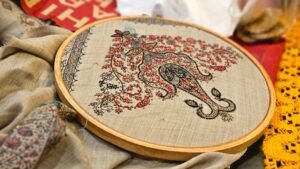

Quick answer: Large cross stitch patterns free pdf files are big charts, often a few hundred stitches across, shared at no cost by designers, thread companies, museums, and stitching communities. Because big charts are split across several pages, you’ll want to understand page overlaps, print at full scale, and plan fabric and floss carefully, and always confirm the pattern’s terms at the original source.
There’s something special about stitching a large cross stitch piece. Watching a big design slowly come to life, stitch by stitch, can be incredibly satisfying. And the good news is that you don’t always need to buy a pattern to try one. Large cross stitch patterns free pdf files are shared by designers, companies, and communities, giving you the chance to take on a big project at no cost.
Big projects come with their own challenges, though. This guide explains what counts as a large cross stitch pattern and where to look for free PDFs. We’ll walk through reading a large pattern PDF, printing and organizing big charts, and planning your time, thread, and fabric. We’ll also cover something many guides skip, which is how to work a large pattern without losing your place, using parking, gridding, and other techniques. Finally, we’ll cover using free patterns respectfully. At Bee’s Quilt Shop, we always admired stitchers who took on big projects, and with the right approach, they’re very achievable.
What Counts as a Large Cross Stitch Pattern
There’s no strict definition of a large cross stitch pattern, but in general, large patterns have high stitch counts. While a small beginner design might be 50 stitches wide, a large pattern might be a few hundred stitches wide and tall. Some very large patterns, often called full coverage or high stitch count designs, cover the entire fabric with stitches.
Stitch count is the best way to judge size. A pattern that’s 200 by 200 stitches is quite large, especially on finer fabric, while a pattern of 400 by 400 stitches or more is a major project. The finished size depends on your fabric count. A 200 stitch wide design is about 14 inches wide on 14 count aida, but only about 11 inches on 18 count.
Color count also affects complexity. Large patterns often use many colors, sometimes dozens, especially for realistic or painterly designs. Some large patterns include fractional stitches, backstitch, and specialty threads. Understanding a pattern’s size and complexity before you start helps you decide whether it suits your skill level and the time you’d like to invest.
Where to Look for Free Large Cross Stitch Pattern PDFs
Free large cross stitch pattern PDFs can be found in several types of places. Independent designers sometimes offer free larger patterns, often as a thank you to newsletter subscribers or as part of a stitch-along that runs over several months. Stitch-alongs are a great way to tackle a big design with a community of stitchers.
Thread and fabric companies occasionally share larger free patterns to showcase their products. Museums and historical societies sometimes share charts based on antique samplers, which can be large and detailed. Stitching communities, forums, and social media groups often share links to free patterns and offer support for big projects.
Some sites offer pattern makers that convert photos into charts. These can produce large patterns, but quality varies, and you should only use photos you have the right to use.
Availability changes over time. Patterns may be offered for a limited time or removed. Always confirm availability and terms at the original source, and download PDFs directly from the designer or company rather than from sites that repost files without permission. This protects designers and ensures you get the complete, correct file.
How to Read a Large Cross Stitch Pattern PDF
Large pattern PDFs are usually split across several pages, since a big chart won’t fit on a single sheet. Each page shows a section of the design, and a page layout diagram, often at the start of the PDF, shows how the pages fit together. Studying this diagram first helps you understand the structure.
Many patterns include overlap, where a few rows or columns are repeated on adjacent pages. This helps you line up sections accurately. The overlap is usually shaded or marked, so you know not to stitch those squares twice.
The color key lists each symbol with its thread color and floss number. On large patterns with many colors, symbols can look similar, so take time to match each symbol carefully. Some patterns use color-coded symbols, while others are black and white only. Grid lines every ten squares help with counting, and many large charts number the rows and columns along the edges. Backstitch is shown as lines over the grid, often on separate pages or in a different color. Understanding these elements makes a large chart much easier to follow.
Printing and Organizing Big Pattern PDFs
Printing large pattern PDFs takes a little planning. Print at actual size or 100 percent scale so symbols aren’t shrunk. If symbols are still small, some stitchers print at a larger scale, which means more pages but easier reading. Check the first page before printing the whole pattern.
Some stitchers tape pages together to create a single large chart, matching the overlap areas carefully. This gives you a complete view of the design. Others prefer to keep pages separate in a binder or folder, working one page at a time.
Marking progress is very helpful on large patterns. Many stitchers use a highlighter or colored pencil to mark squares as they stitch them. This makes it easy to see what’s done and what’s left. Keeping a clean original copy and a separate working copy protects the original. Some stitchers use digital apps or tablets to view and mark charts instead of printing. Whichever method you choose, a system for tracking progress keeps you organized over a long project.
Planning Time, Thread, and Fabric for a Big Project
Planning is key for a big cross stitch project. Start with fabric. Calculate the finished size using the stitch count and your fabric count, then add a generous margin on every side for hooping, framing, and finishing. For large pieces, many stitchers use a scroll frame or stretcher bars, which may need extra fabric along the edges.
Thread planning comes next. The pattern’s color key may list how many skeins of each color you’ll need. If not, estimate based on how much of the design uses each color. Buying a little extra of colors used heavily helps avoid running short or dealing with dye lot differences.
Time is harder to predict. Large projects can take weeks, months, or longer, depending on how often you stitch and the complexity of the design. There’s no set timeline, and many stitchers enjoy working on a big project slowly, alongside smaller ones. Setting a comfortable pace and celebrating milestones, like finishing a page, keeps the project enjoyable. Big projects are a marathon, not a sprint, and the journey is part of the fun.

Working a Large Pattern Without Losing Your Place
Losing your place is one of the biggest challenges with large patterns, especially when they have many colors. Gridding your fabric is a popular solution. Using a removable thread or a washable fabric pen, mark lines on your fabric every ten squares to match the chart’s grid lines. This makes counting much easier and reduces errors.
Parking is a technique many stitchers use for full coverage designs. Instead of finishing one color at a time across the whole chart, you work a small block, such as a ten by ten square, and park each thread nearby on the front of the fabric when you move on. This keeps colors organized and reduces the need to count over long distances.
Working page by page or block by block helps too. Focusing on one small area at a time makes a huge design feel manageable. Marking your progress on the chart, as mentioned earlier, keeps you on track. Some stitchers use a magnetic board and ruler to hold their chart and highlight the current row. These techniques help you stay accurate and enjoy the process.
Using Free Patterns Respectfully
Free patterns are a generous gift from designers, and using them respectfully helps ensure they keep sharing. Most free patterns are for personal use only. You can usually stitch them for yourself or as gifts, but you generally can’t sell the pattern, share the PDF, or post it online without permission.
Selling finished pieces may or may not be allowed, depending on the designer’s terms. Always read the terms carefully. Crediting the designer when you share photos of your work is a kind and respectful habit that helps them reach new stitchers. Sharing a link to the designer’s page is usually welcome, while sharing the file itself often isn’t.
If you’re unsure about a pattern’s terms, contacting the designer is the best approach. This is general information, not legal advice. For more on finding and using free patterns, our guide to absolutely free cross stitch patterns covers the topic in detail, and our guide to beginner cross stitch patterns free printable is helpful if you’re still building your skills.
Bee’s Quilt Shop is here to support your biggest stitching dreams. Explore our Embroidery and Monogramming guides, browse the Patterns collection for more ideas, and read our guide to cross stitch cloth to choose fabric for a big project.
Frequently Asked Questions
What is considered a large cross stitch pattern?
Large patterns typically have high stitch counts, often a few hundred stitches wide and tall. Full coverage designs that fill the entire fabric are among the largest.
How do I read a cross stitch pattern that spans multiple pages?
Start with the page layout diagram, which shows how pages fit together. Use the overlap areas to line up sections, and don’t stitch shaded overlap squares twice.
What is parking in cross stitch?
Parking is a technique where you work a small block and park each thread on the front of the fabric nearby, ready for the next block. It helps keep colors organized on large, many-colored designs.
How much fabric do I need for a large cross stitch pattern?
Divide the stitch count by your fabric’s stitches per inch, then add a generous margin for framing. Bee’s Quilt Shop always suggested buying extra for large frames.
Can I share a free cross stitch PDF with friends?
Usually not, since most designers keep the rights to their patterns. Sharing a link to the designer’s page is generally the respectful way to share.
This article is intended for general educational and informational purposes only and does not provide legal advice. Pattern availability and terms vary by designer and source, and results vary by skill level, fabric, and equipment. Bee’s Quilt Shop shares this guide as part of our ongoing library of quilting, sewing, and embroidery resources.