Quick answer: A crochet pattern book typically includes a curated collection of patterns organized by theme, along with a stitch guide and skill-level grading for each project. Evaluating a book’s instructional clarity and project variety before buying, and building a mix of technique references and project-focused books over time, leads to a genuinely useful collection.
Crochet pattern books remain one of the most reliable ways to build both skill and a real project library, even in an era when digital patterns and video tutorials are everywhere online. There’s something genuinely useful about having a curated, tested collection of patterns in one physical or digital volume rather than piecing together instructions from scattered individual sources. This guide covers what to expect from a typical crochet pattern book, choosing one as a beginner, reading common crochet abbreviations, weighing physical books against digital pattern collections, building a useful collection over time, and how crochet pattern books complement quilting and sewing more broadly. Bee’s Quilt Shop carries crochet books alongside our sewing and quilting resources, and the short version is that a well-chosen pattern book earns its shelf space many times over across years of use. Beyond the individual patterns themselves, a good pattern book often reflects a particular designer’s voice and style, and finding a handful of authors whose aesthetic and instructional approach genuinely click with you is worth more long term than simply owning the largest possible pattern collection.
What To Expect From A Crochet Pattern Book
A typical crochet pattern book includes a collection of individual patterns, usually organized around a theme, like amigurumi, garments, or home decor, along with a stitch guide covering the basic techniques used throughout the book. The stitch guide section matters more than it might seem at first glance, since it’s what makes a book usable for someone still learning foundational stitches, rather than assuming prior crochet knowledge going in. Skill grading, often indicated with a simple beginner, intermediate, or advanced label on each individual pattern, helps readers navigate a book with projects spanning a wide range of difficulty, rather than needing to guess which pattern actually matches their current skill level. Many books also include a gauge and materials section for each pattern, specifying hook size, yarn weight, and finished dimensions, information that’s genuinely essential for making sure a finished project turns out the intended size rather than noticeably larger or smaller than pictured.
Choosing A Pattern Book As A Beginner
Choosing a pattern book as a genuine beginner comes down mostly to two things, instructional clarity and honest project variety, and it’s worth evaluating both before buying. Instructional clarity varies enormously between books, some walk through every stitch with detailed photos or diagrams at each step, while others assume a working knowledge of basic stitches and jump straight into pattern instructions, which can be genuinely frustrating for someone still learning the fundamentals. Checking for a preview, sample pages, or reviews mentioning how beginner-friendly the instructions actually are, before committing to a purchase, helps avoid ending up with a book that assumes more prior knowledge than you currently have. Project variety matters too, a book with a good mix of quick, simple projects alongside a few more ambitious pieces gives room to grow within a single volume, rather than needing to buy an entirely new book the moment basic skills are mastered.
Reading Crochet Pattern Abbreviations
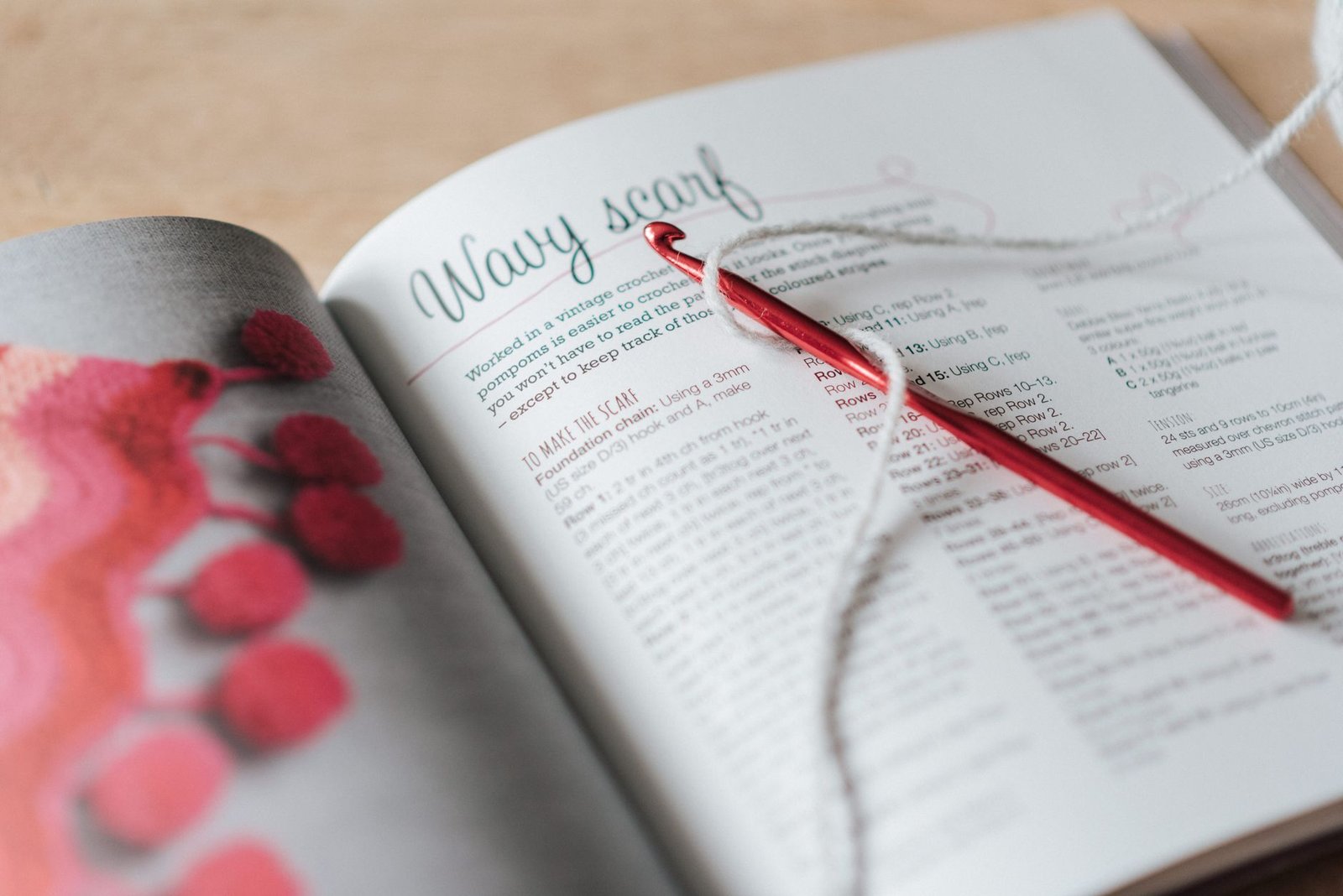
Reading crochet pattern abbreviations is one of the first genuine hurdles for a new crocheter, since patterns are written in a dense, compressed shorthand rather than full sentences, and it can look like an entirely foreign language at first glance. Common abbreviations like sc for single crochet, dc for double crochet, and ch for chain stitch form the backbone of most pattern instructions, and most books include an abbreviation key, usually near the front, translating each shorthand term used throughout the book. Understanding that abbreviations are largely standardized across the crochet world, rather than specific to any one book or author, means that learning them once genuinely pays off across every future pattern book or online pattern you encounter afterward. It’s worth keeping a printed or bookmarked abbreviation reference handy while working through early patterns, since referring back to it regularly during a project is completely normal and gets faster with practice rather than something to feel behind about. Sticky tabs or a simple bookmark placed directly on the abbreviation key page make it much faster to flip back and forth while working through an early pattern, a small habit that saves real time until the shorthand becomes second nature. Writing a personal cheat sheet of the abbreviations you use most, kept tucked inside the book’s front cover, tends to be faster to reference than flipping to the official key every single time a pattern calls for it. Many stitchers also find that working through a book’s simplest pattern first, purely as practice with the abbreviations themselves, builds fluency faster than trying to memorize the shorthand in isolation before starting a real project. That hands-on repetition tends to stick far better than passively reading through a glossary from start to finish.
Physical Books Vs Digital Pattern Collections
Physical books and digital pattern collections each offer real advantages, and the right choice often comes down to personal working style more than any objective superiority of one format. Physical books have real convenience for hands-on crafting, they lie flat on a table beside your work, don’t need charging, and many crocheters simply find flipping through actual pages more pleasant than scrolling on a screen while their hands are busy with yarn and a hook. Digital pattern collections offer searchability that a physical book can’t match, being able to search a whole library for a specific stitch technique or yarn weight in seconds is a real advantage once a collection grows large. Cost is worth weighing too, physical books represent a bigger upfront purchase but nothing further needed afterward, while some digital pattern platforms use ongoing subscription models, so the actual cost comparison depends heavily on how many patterns you expect to use over time.
Building A Useful Pattern Book Collection
Building a genuinely useful pattern book collection over time comes down to balancing two different kinds of books rather than just accumulating volumes randomly. Technique reference books, ones that teach a specific skill in real depth, like colorwork, garment shaping, or amigurumi construction, are worth having on hand even after you’ve worked through their specific patterns, since they function as ongoing reference material for future original projects too. Project-focused books, built around a curated set of specific finished patterns rather than teaching broader technique, are what most people picture when they think of a pattern book, and they’re worth choosing based on whether the actual finished projects genuinely appeal to you, rather than the book’s reputation alone. A collection with a healthy mix of both types tends to serve a crocheter better long-term than an entire shelf of pattern-only books with no deeper technique reference to fall back on when tackling something genuinely new.
How Crochet Pattern Books Complement Quilting And Sewing
Crochet and quilting or sewing overlap more than people sometimes expect, and it’s genuinely common for crafters to enjoy multiple fiber crafts at once rather than sticking to just one. Crochet elements show up in mixed-media quilting and sewing projects fairly often, a crocheted edging on a quilt, a crocheted flower embellishment on a bag, or granny square blocks incorporated into a larger textile piece all borrow crochet technique for a sewing or quilting end result. The skills genuinely transfer in both directions too, a quilter’s comfort with reading detailed pattern instructions and managing precise measurements carries over naturally to following crochet patterns, and a crocheter’s familiarity with yarn weight and gauge translates reasonably well to thinking about fabric weight and drape in a sewing context. At Bee’s Quilt Shop, we’ve found that crafters who enjoy one fiber art are often naturally curious about the others, so keeping crochet pattern books alongside our quilting and sewing resources reflects how a lot of our customers actually shop and craft across categories rather than staying strictly within one. Our fabric guides and notions resources are worth a look too if a crochet project has you thinking about incorporating woven fabric backing or trim into a finished piece, since combining fiber crafts often means sourcing materials that fall slightly outside a single craft’s usual supply list.
Curious how crochet pairs with quilting and sewing? Browse our Fabric Guides here at Bee’s Quilt Shop for more craft resources, and check out our crochet-adjacent embroidery guides if you enjoy working across fiber crafts. Explore more General Sewing & Quilting guides on the blog, or browse our Books collection to see what is currently available.
Frequently Asked Questions
What should a beginner look for in a crochet pattern book?
Instructional clarity matters most, some books walk through every stitch with detailed photos while others assume prior knowledge, which can be frustrating for a true beginner. Checking for sample pages or reviews mentioning how beginner-friendly the instructions are helps before buying.
How do I read crochet abbreviations?
Common abbreviations like sc for single crochet, dc for double crochet, and ch for chain stitch are largely standardized across the crochet world. Most books include an abbreviation key near the front that translates every shorthand term used throughout.
Are physical crochet books better than digital patterns?
Neither is objectively better, physical books lie flat and do not need charging, while digital collections offer searchability a physical book cannot match. It really comes down to personal working style and how many patterns you expect to use over time.
What is the difference between a technique book and a project book?
A technique book teaches a specific skill in depth, like colorwork or garment shaping, and stays useful as reference material long after its included patterns are finished. A project book is built around a curated set of specific finished patterns instead.
Do quilters and crocheters usually enjoy both crafts?
Yes, it is genuinely common for crafters to enjoy multiple fiber arts at once, and skills like reading detailed instructions and managing gauge or seam allowance transfer naturally between them. At Bee’s Quilt Shop, we keep crochet books alongside our quilting resources for exactly this reason.
This article is intended for general educational and informational purposes only, based on common crochet practices. Results vary by pattern, yarn, and skill level, so following the specific instructions in your book is always recommended. Bee’s Quilt Shop shares this guide as part of our ongoing library of quilting and sewing resources.