Quick answer: Embroidered dish towels are kitchen towels decorated with hand or machine stitching, from simple monograms to seasonal motifs and classic day-of-the-week designs. Flour sack cotton is a favorite base because it’s smooth, absorbent, and easy to stitch, and with colorfast thread and gentle care, embroidered towels can be both pretty and practical.
Embroidered dish towels have a special charm. They bring a little handmade warmth to the most everyday room in the house, and they’re one of the most approachable embroidery projects you can try. Whether you stitch a cheerful lemon, a seasonal pumpkin, a family monogram, or a full set of vintage-style days of the week, these towels are fun to make and lovely to give.
This guide explains what embroidered dish towels are and which fabrics work best for stitching. We’ll share design ideas, walk through how to embroider a towel by hand or by machine, and cover washing and care. We’ll also talk about something many guides skip, which is how to keep embroidered towels useful in the kitchen rather than just decorative. Finally, we’ll share gift ideas. At Bee’s Quilt Shop, embroidery services were part of our history, and kitchen towels were always a popular, feel-good project for stitchers of every level.
What Are Embroidered Dish Towels
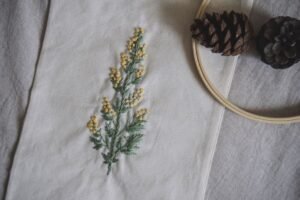
Embroidered dish towels are kitchen towels decorated with stitching. They come in a few main types. Hand-embroidered towels are stitched with a needle and floss, often using simple stitches like backstitch, stem stitch, satin stitch, and lazy daisy. They have a cozy, handmade look and are a favorite for vintage-style designs.
Machine-embroidered towels are stitched with an embroidery machine, which can produce detailed, dense designs and lettering quickly. They’re popular for monograms, logos, and personalized gifts.
Flour sack towels deserve a special mention. Historically, flour and other goods were sold in cotton sacks, and thrifty homemakers reused the fabric for towels, clothing, and quilts. Today, flour sack towels are made new, but they keep the same smooth, lightweight cotton weave that made the originals so useful. Their large size, absorbency, and smooth surface make them a favorite for embroidery. Whether you choose flour sack, terry, or another style, embroidered dish towels are a wonderful way to blend practicality with creativity.
Best Towel Fabrics for Embroidery
The best towel fabrics for embroidery have a smooth, tightly woven surface. Flour sack cotton is a top choice, since its fine, even weave holds stitches neatly and its light weight makes it easy to hoop. It’s also highly absorbent and becomes softer with each wash.
Plain weave cotton towels and cotton and linen blends are also excellent. Linen has a beautiful texture and dries quickly, though it can wrinkle easily. Blends often combine the best of both, with a natural look and good absorbency. Waffle weave towels have a textured surface that can be stitched on, but the texture can make fine designs harder to read, so bolder designs often work better.
Terry cloth towels are very absorbent, but their loops can swallow stitches. If you want to embroider on terry, a water-soluble stabilizer on top helps keep stitches from sinking into the pile. Whatever fabric you choose, prewashing is a good idea. It removes sizing and helps prevent shrinkage after you’ve stitched, which can cause puckering around your design.
Embroidery Designs for Dish Towels
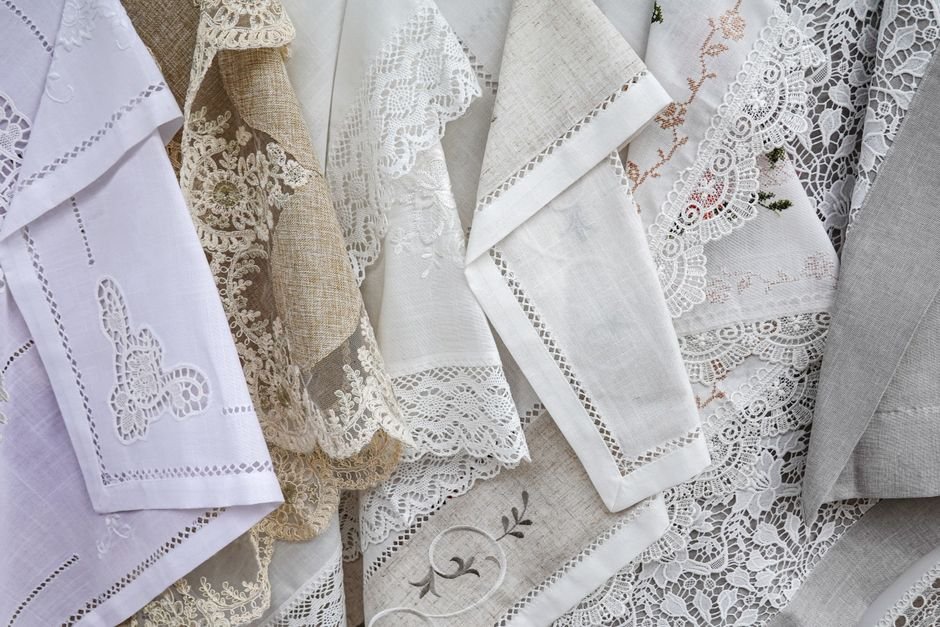
Dish towel designs range from simple to elaborate. Seasonal designs are always popular, such as flowers for spring, fruit for summer, pumpkins and leaves for fall, and snowflakes or holly for winter. Many stitchers make a set for each season and rotate them through the year.
Kitchen-themed designs are a natural fit, including teapots, mixing bowls, fruits, vegetables, herbs, and baked goods. Fun phrases and kitchen puns add personality. Day-of-the-week designs have a long tradition, with a different motif for each day often showing a household chore. Vintage-inspired versions of these sets are still popular today.
Monograms and names make towels personal. A single initial, a family name, or a date can turn a simple towel into a meaningful keepsake. Placement matters as well. Most designs are placed near one end of the towel, centered a few inches above the hem, so they show when the towel is folded and hung. Keep designs small to medium in size, since large, dense designs can make a towel stiff and less absorbent.
How to Embroider a Dish Towel
To hand embroider a dish towel, start by prewashing and pressing the towel. Mark your design using a water-soluble pen, transfer paper, or a printable stabilizer. Place the area in a hoop, making sure the fabric is taut but not stretched. If your towel is thin, a lightweight stabilizer on the back helps support the stitches.
Choose a needle and floss suited to the design, often two or three strands of cotton floss. Work your stitches, keeping tension even so the fabric doesn’t pucker. Start and end threads neatly on the back without large knots, since knots can show through or wear on the fabric. When finished, remove any markings or stabilizer according to the product’s directions and press face down on a towel.
For machine embroidery, hoop the towel with an appropriate stabilizer, such as tear-away or cut-away for flour sack, and a water-soluble topper for terry. Center the design carefully and choose a thread suited to frequent washing. Test your design on a scrap first if possible, since thin towels can pucker with dense designs. Remove excess stabilizer after stitching.
Keeping Embroidered Dish Towels Useful, Not Just Pretty
A common worry with embroidered dish towels is that they’ll be too pretty to use. Keeping them practical starts with design choices. Smaller, lighter designs keep the towel soft and absorbent, while dense, heavily filled designs can make the fabric stiff and less effective at drying dishes.
Placing designs near the end of the towel leaves most of the surface free for drying. Many stitchers keep the embroidery on the part that shows when the towel is hung, so the working area stays plain. Using colorfast floss or machine embroidery thread is important if the towels will be used and washed often.
Neat backs make a difference too. Bulky knots and long floating threads can catch on dishes or snag in the wash. Weaving thread tails under existing stitches keeps the back tidy. Some stitchers add a lightweight fusible backing over the stitches to protect them, though this can make the area slightly stiffer. Choosing practical designs and techniques means your towels can be enjoyed in daily use, not just displayed.
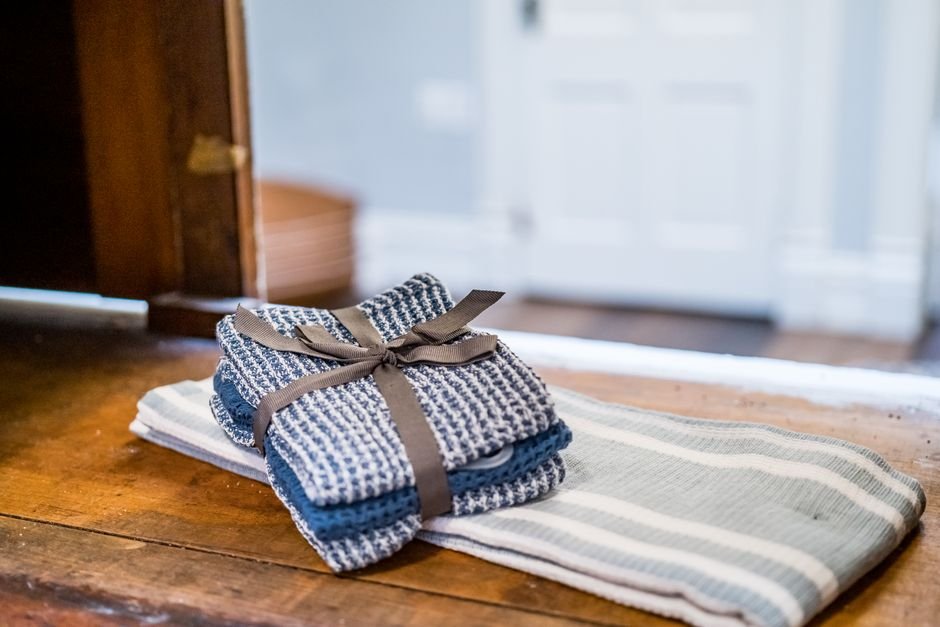
Washing and Caring for Embroidered Dish Towels
Caring for embroidered dish towels helps them last. Many stitchers wash them in cool or warm water on a gentle cycle, using a mild detergent. Turning the towel inside out or placing it in a mesh laundry bag can protect the stitches from snagging.
Colorfastness is important, especially with bright or deep floss colors. Many quality floss brands are colorfast, but if you’re unsure, test a few strands by wetting them and pressing them against a white cloth. If color transfers, consider choosing a different thread. Washing new towels separately the first time is a sensible precaution.
Drying on low heat or air drying helps prevent shrinkage and protects the stitches. Avoid bleach on colored embroidery, since it can fade or damage threads. Pressing the towel face down on a soft towel keeps stitches looking raised and neat. With gentle care, embroidered dish towels can stay bright and useful for many years.
Embroidered Dish Towels as Gifts
Embroidered dish towels make thoughtful, practical gifts. A set of seasonal towels, a monogrammed towel for newlyweds, or a housewarming towel stitched with a new address can all become cherished keepsakes. Teachers, neighbors, and hosts often appreciate a handmade towel paired with a jar of jam or a favorite recipe.
Personalization makes a gift feel special. Adding a name, a date, or a meaningful phrase turns a simple towel into something unique. Wrapping a towel around a wooden spoon or a set of measuring cups makes an easy, charming presentation.
If you enjoy making towels, you might also love stitching other household linens. Our guide to embroidery pillowcases covers another beloved gift project, and our guide to embroidery supplies helps you gather what you need. Handmade gifts carry a lot of love, and embroidered towels are a lovely way to share your craft.
Bee’s Quilt Shop is here to help you stitch something lovely for the kitchen. Explore our Embroidery and Monogramming guides, browse the Embroidery Thread collection for colorful options, and read our embroidery floss guide before choosing colors.
Frequently Asked Questions
What is the best towel to embroider on?
Many stitchers prefer flour sack towels because they’re smooth, lightweight, and easy to hoop. Plain weave cotton and cotton and linen blends are also excellent choices.
Do I need stabilizer to embroider a dish towel?
Stabilizer is helpful, especially on thin towels or for machine embroidery. A water-soluble topper also helps when stitching on textured towels like terry.
Will embroidered dish towels hold up in the wash?
With colorfast thread and gentle care, they usually hold up well. Washing on a gentle cycle and drying on low heat helps protect the stitches.
How do I keep embroidery floss from bleeding?
Choose colorfast floss and test deep colors by wetting a few strands and pressing them on a white cloth. Bee’s Quilt Shop often suggested washing new towels separately the first time as a precaution.
Where should I place embroidery on a dish towel?
Most stitchers center the design a few inches above one hem, so it shows when the towel is folded and hung. This also keeps most of the towel free for drying dishes.
This article is intended for general educational and informational purposes only and reflects common embroidery and laundering practices. Fabrics, threads, and care needs vary, and results vary by skill level, fabric, and equipment. Bee’s Quilt Shop shares this guide as part of our ongoing library of quilting, sewing, and embroidery resources.