Quick answer: A patchwork quilt is built from individual fabric pieces sewn together edge to edge into a pieced design, distinct from whole-cloth or applique quilting approaches. Accurate cutting, a consistent quarter inch seam allowance, and pressing seams as you go are the foundational skills that make even complex-looking patchwork designs achievable.
A patchwork quilt is what most people picture when they think of traditional quilting, a top made from many individual fabric pieces sewn together into a cohesive, pieced design rather than cut from a single continuous fabric. If you’re new to quilting, understanding what actually defines patchwork, and how it differs from other quilting approaches like whole-cloth or applique, is a genuinely useful starting point before choosing your first project. This guide covers what defines a patchwork quilt, popular patchwork styles, fabric selection, the basic piecing technique, tools that make the process easier, and common beginner mistakes worth knowing about ahead of time. Bee’s Quilt Shop has guided countless quilters through their first patchwork project, and the short version is that patchwork’s core technique, sewing pieces together accurately with a consistent seam allowance, stays remarkably consistent across even the most complex-looking finished designs. Once that foundational accuracy clicks, moving from a simple beginner block to something visually far more intricate is much more about pattern-reading patience than any dramatically new sewing skill.
What Defines A Patchwork Quilt
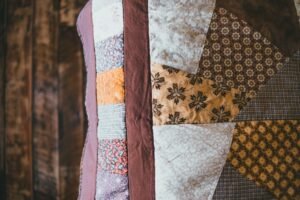
A patchwork quilt is defined by its pieced construction method, individual pieces of fabric, cut to specific shapes and sizes, sewn together edge to edge to build up a larger design, typically organized into repeating blocks that combine to form the full quilt top. This stands in contrast to a whole-cloth quilt, which uses a single continuous piece of fabric with all the visual interest coming from the quilting stitches themselves rather than pieced fabric. It also differs from an applique quilt, where shapes are cut and stitched on top of a background fabric rather than pieced together edge to edge as patchwork does, though the two techniques are frequently combined in a single quilt for added visual variety. The defining characteristic of patchwork specifically is that seams join pieces directly together, side by side, building the design entirely through the piecing itself rather than through appliqued shapes layered on top of a base fabric.
Popular Patchwork Quilt Styles
A handful of patchwork styles have become genuine quilting staples, recognized across generations of quilters and still popular today. The log cabin block, built from strips arranged around a central square in a spiraling pattern, remains one of the most enduringly popular patchwork designs, valued both for its striking visual effect and its relatively straightforward strip-based construction. The nine-patch, a simple grid of nine equal squares, is often one of the very first blocks new quilters learn, since its construction teaches foundational seam-matching skills without much geometric complexity. Beyond these two classics, styles like flying geese, pinwheels, and various star block variations round out the most commonly recognized patchwork patterns, each offering a different balance of visual complexity and construction difficulty for quilters at different skill levels. Regional and historical block names add another layer of interest for quilters curious about the craft’s history, many traditional patchwork blocks carry names tied to their era or region of origin, and tracing a favorite block back to its historical roots is a genuinely enjoyable rabbit hole for anyone drawn to the deeper story behind the patterns. Keeping a small notebook of favorite block names and their history alongside your pattern collection adds a nice personal layer to a hobby that already connects generations of quilters together. Many local guilds and historical societies keep records of regional block variations too, and reaching out to one is a genuinely rewarding way to learn the story behind a block that has been passed down in your own family. That deeper context often adds real meaning to a project that might otherwise feel like just another set of squares to piece together.
Choosing Fabric For A Patchwork Project
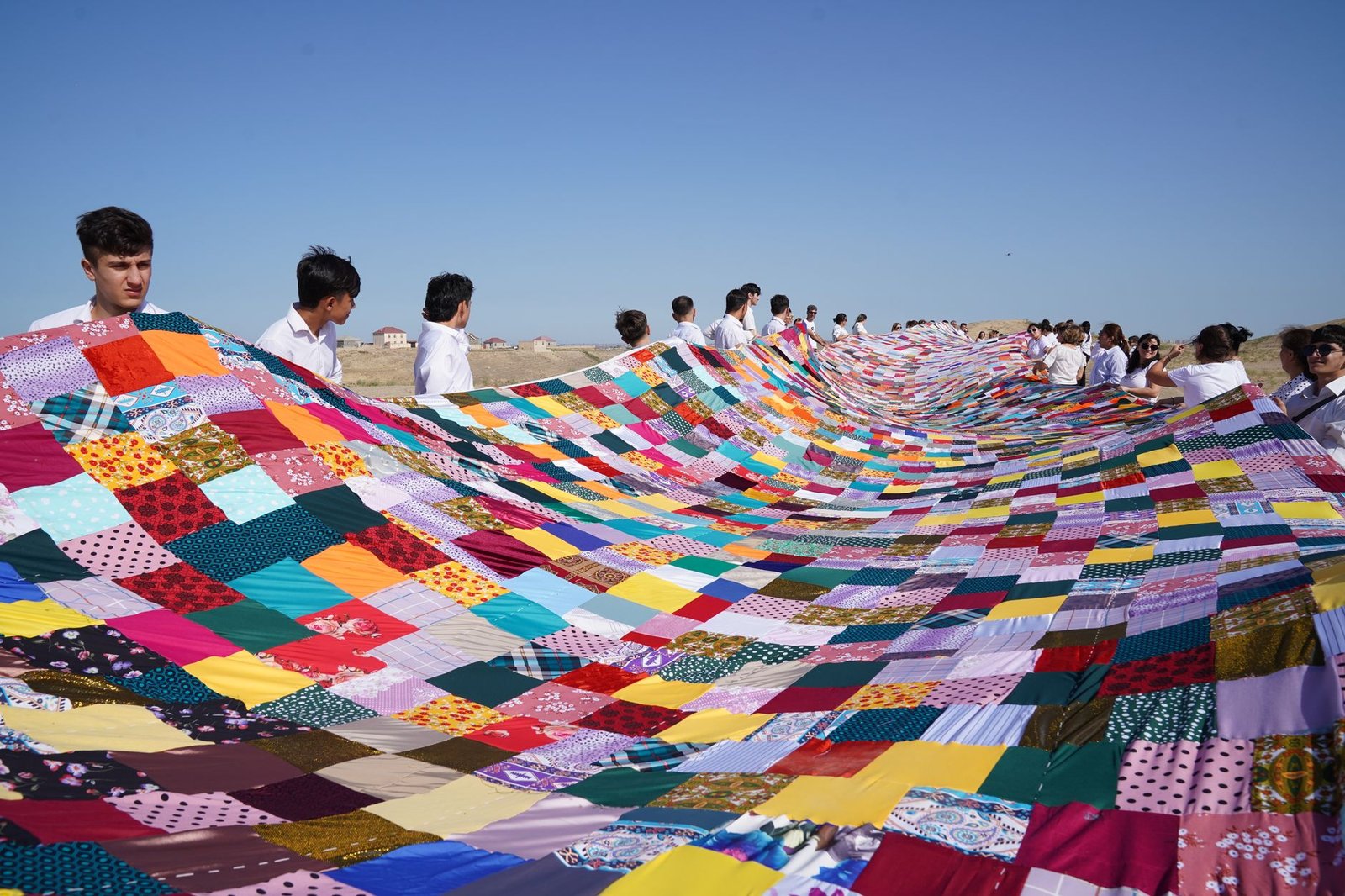
Choosing fabric for a patchwork project involves coordinating prints, solids, and scale in a way that keeps the finished quilt feeling cohesive rather than visually chaotic. A common approach pairs a handful of coordinating prints from the same fabric line or color family with one or two solid fabrics, letting the solids provide visual breathing room between busier printed pieces. Print scale matters more than beginners often expect, mixing several large-scale prints in a small-scale block can make individual pieces hard to read clearly, while pairing a large-scale print with smaller-scale supporting prints usually creates better visual balance across a finished block. Building a fabric palette before cutting a single piece, laying out potential fabric choices together and stepping back to evaluate how they read as a group, catches color or scale mismatches while they’re still easy to fix, rather than after pieces are already cut and committed to a specific project.
Basic Patchwork Piecing Technique
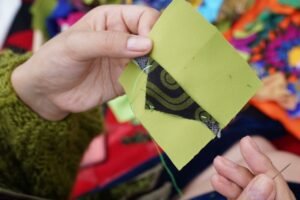
The basic patchwork piecing process follows a consistent rhythm regardless of which specific block or pattern you’re working on. Cutting accurately comes first, and it genuinely matters more in patchwork than in almost any other kind of sewing, since even a small deviation in piece size compounds across dozens of seams in a full quilt top, throwing off the alignment of an entire block. Piecing then joins the cut pieces together according to the pattern’s sequence, typically working from smaller sub-units up to larger completed blocks, sewing with a consistent, accurate seam allowance, almost universally a quarter inch in quilting, at every single seam. Pressing seams as you go, rather than waiting until an entire block is assembled, keeps intersections flat and makes subsequent piecing steps noticeably easier, since pressing a bulky, unpressed seam later in the process is far more difficult than pressing each seam right after it’s sewn.
Tools That Make Patchwork Easier
A handful of tools make patchwork piecing considerably more accurate and less frustrating, and investing in a few key items pays off across every future patchwork project. A rotary cutter, used with a clear acrylic ruler and a self-healing cutting mat, allows for far more precise, repeatable cuts than scissors alone, and precision at the cutting stage is where accurate patchwork genuinely begins. A quarter inch presser foot, sometimes with a built-in guide, helps maintain that consistent seam allowance throughout piecing without needing to constantly measure and mark, which speeds up construction considerably on a project with dozens or hundreds of individual seams. A good pressing setup, whether a full-sized ironing board or a smaller pressing station kept right at the sewing machine, encourages pressing seams consistently throughout construction rather than putting it off, since a nearby iron makes that habit much easier to maintain than one requiring a trip across the room each time.
Common Beginner Mistakes In Patchwork Quilting
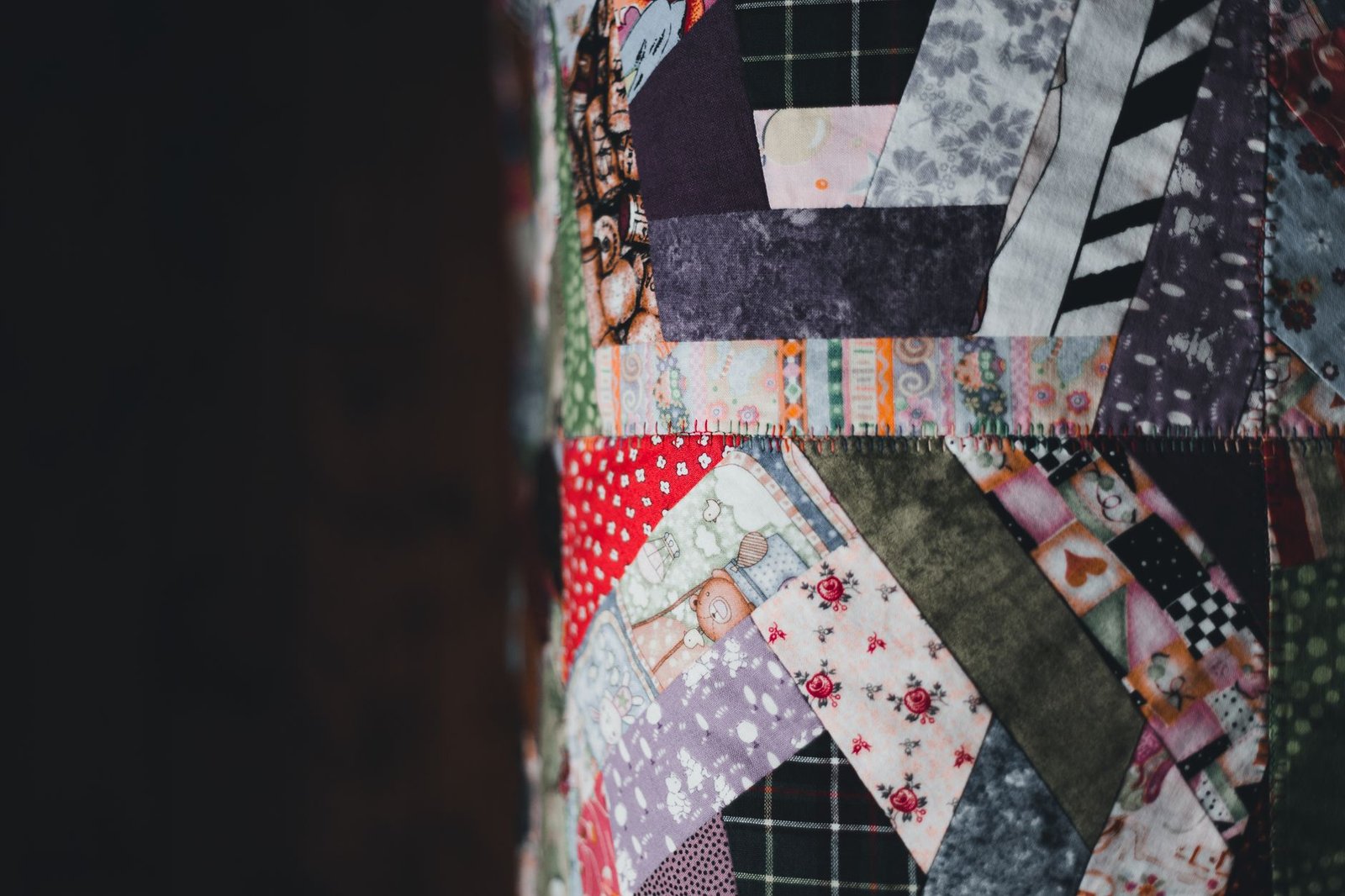
Beginner patchwork quilters run into a couple of predictable mistakes, and knowing what to watch for ahead of time helps avoid the most common sources of frustration. Seam allowance inconsistency, where the actual sewn seam drifts slightly wider or narrower than the intended quarter inch from piece to piece, is probably the single most common patchwork issue, and it compounds noticeably across a full block or quilt top, throwing blocks out of alignment with each other even when each individual seam looks fine on its own. Squaring up blocks, trimming each completed block to a precise, consistent size before joining them together, is a step some beginners skip to save time, but doing it consistently makes joining blocks into rows and then into a finished quilt top dramatically easier and more accurate. At Bee’s Quilt Shop, we tell new quilters that a bit of extra care at the cutting and pressing stages pays for itself many times over by the time a quilt top comes together, since fixing an alignment problem after blocks are already joined is far more frustrating than preventing it from the start. A design wall, even a simple flannel-backed board leaned against a wall, is genuinely worth setting up too, laying out finished blocks before sewing them into rows lets you catch a placement or color issue while it is still easy to swap a single block rather than after an entire row is already stitched together.
Ready to start your first patchwork quilt? Browse our Fabric Guides here at Bee’s Quilt Shop for more piecing advice, and check out our batting and jelly roll guides to plan out the rest of your project. Explore more Quilt Patterns & Blocks guides on the blog, or browse our Patterns collection to see what is currently available.
Frequently Asked Questions
What is the difference between a patchwork quilt and a whole-cloth quilt?
A patchwork quilt is built from individual pieces sewn together edge to edge, while a whole-cloth quilt uses a single continuous piece of fabric with visual interest coming from the quilting stitches alone. The two techniques produce genuinely different looks.
What is a good first patchwork block for a beginner?
The nine-patch, a simple grid of nine equal squares, is often one of the very first blocks new quilters learn since it teaches foundational seam-matching skills without much geometric complexity.
Why do my patchwork blocks not line up correctly?
Seam allowance inconsistency, where the actual sewn seam drifts slightly wider or narrower than the intended quarter inch, is the most common cause and compounds across a full block. Squaring up each block to a precise size before joining also helps considerably.
What tools do I need for accurate patchwork piecing?
A rotary cutter with a clear acrylic ruler and self-healing mat allows for far more precise cuts than scissors alone, and a quarter inch presser foot helps maintain a consistent seam allowance throughout.
Should I press patchwork seams open or to the side?
Both methods are used depending on the pattern and personal preference, but pressing seams as you go, rather than waiting until an entire block is assembled, keeps intersections flat either way. At Bee’s Quilt Shop, we recommend pressing after every seam rather than saving it for the end.
This article is intended for general educational and informational purposes only, based on common quilting practices. Results vary by fabric, pattern, and technique, so checking your specific pattern’s instructions is always recommended. Bee’s Quilt Shop shares this guide as part of our ongoing library of quilting and sewing resources.