Quick answer: The yellow brick road quilt pattern creates a winding, path-like visual effect using layer cake squares combined with smaller accent pieces. It’s a favorite for showcasing precut fabric bundles efficiently and beautifully.
The yellow brick road quilt pattern has become one of the most beloved go-to designs for quilters looking to make the most of precut layer cake fabric bundles, offering a visually striking, path-like layout that comes together with surprising speed given how dynamic the finished result looks. Named for the winding, brick-like visual path the pattern creates across a finished quilt top, this design has earned a devoted following among quilters who love precuts specifically because it uses them so efficiently while still producing a genuinely eye-catching finished piece. This guide covers what this pattern actually is, why it’s become such a popular choice for precut fabric specifically, the fabric choices that work particularly well within this layout, the basic construction approach, sizing flexibility across different finished quilt dimensions, and common beginner mistakes worth watching for. Whether you’ve got an unused layer cake in your stash or you’re planning to buy one specifically for this pattern, this guide covers the practical basics. At Bee’s Quilt Shop, this pattern comes up constantly from quilters looking for a genuinely satisfying project to showcase a favorite layer cake collection. It’s become something of a modern classic in its own right, popular enough now that many quilters recognize the finished look on sight even if they’ve never pieced the pattern themselves.
What The Yellow Brick Road Quilt Pattern Is
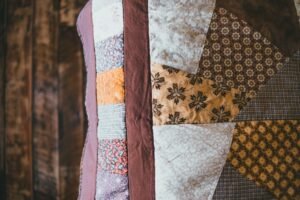
The yellow brick road quilt pattern is built around a simple, repeating unit constructed primarily from ten inch layer cake squares combined with smaller charm-pack-sized accent pieces, arranged in a layout that creates a winding, staggered visual path across the finished quilt top rather than a static, symmetrical grid. The pattern’s name comes directly from that visual effect, since the arrangement of light and dark value squares creates a meandering path reminiscent of the famous yellow brick road from classic literature and film, though the finished quilt certainly doesn’t need to actually be yellow to achieve this signature winding visual effect. Despite the somewhat complex-looking finished result, the underlying block construction is genuinely straightforward, relying on simple squares and rectangles rather than any curved piecing or unusual angles, which is part of why this pattern has become so popular among quilters at a range of skill levels rather than being reserved for advanced piecers alone. The visual complexity essentially comes from the clever arrangement of simple shapes rather than from any inherently difficult piecing technique, which is a big part of the pattern’s broad, lasting appeal.
Why This Pattern Is Popular With Precut Fabric
This pattern’s popularity with precut fabric specifically comes down to how efficiently it uses a standard layer cake bundle without requiring extensive additional cutting or a large secondary fabric purchase. Because the pattern is built directly around ten inch layer cake squares, quilters can move from opening a fresh layer cake bundle to actual piecing relatively quickly, without the extensive measuring and cutting that many other quilt patterns require before assembly even begins. The pattern’s design also showcases a layer cake’s coordinated print variety beautifully, since the winding path layout puts nearly every fabric in the bundle on genuine visual display rather than relegating some prints to a background role. Many quilters specifically choose this pattern as the perfect vehicle for a layer cake they’ve been saving for the right project, appreciating how well it honors a beautiful fabric collection without over-complicating the actual construction process. Many quilt shops specifically pair this pattern with new layer cake releases in their class offerings, since it reliably produces a striking finished quilt within a timeframe that suits a typical multi-session class format.
Fabric Choices That Work Well For This Pattern
Fabric choice matters quite a bit for how clearly the pattern’s signature winding path effect reads in the finished quilt, and thinking about value contrast, meaning the relative lightness or darkness of each print, is more important here than focusing purely on color. A layer cake with a healthy mix of both light and dark value fabrics tends to produce the clearest, most visually dynamic winding path effect, since the pattern’s visual impact depends heavily on that light-dark contrast rather than color variety alone. Bundles that lean heavily toward one value, mostly light or mostly dark fabrics with little contrast between them, can still work for this pattern, but the resulting path effect tends to read much more subtly, which may or may not match what a specific quilter is hoping to achieve. Many quilters find it worth laying out their layer cake squares by value before committing to a specific arrangement, simply to confirm the light-dark contrast will produce the visual effect they’re actually going for once the quilt top comes together. Squinting at the fabric layout, or viewing it through a camera’s grayscale filter, is a genuinely helpful trick here too, since it strips away color and lets you judge value contrast much more objectively than the eye can manage while distracted by color alone.
Basic Construction Approach
The basic construction approach for this pattern involves creating individual pieced units from a combination of larger layer cake squares and smaller accent pieces, arranged according to the pattern’s specific layout instructions to create the winding path effect once multiple units are joined together. Because the pattern relies on a specific, deliberate arrangement of light and dark units rather than random or scrappy placement, laying out your complete quilt top on a design wall or large flat surface before sewing anything together is genuinely worth the extra time, letting you confirm the path effect looks right and make any adjustments before committing to permanent seams. Once the layout is confirmed, assembly follows straightforward row-by-row construction similar to many other quilt patterns, joining individual pieced units into rows and then joining those rows together to complete the full quilt top. Numbering or labeling each unit according to its position in your confirmed layout before moving it from the design wall to the sewing machine is a simple habit that prevents the genuinely common mishap of accidentally swapping two units and disrupting the carefully planned path effect.
Sizing Options For This Pattern
This pattern offers real flexibility in finished size, scaling comfortably from a smaller lap quilt using a single layer cake bundle up to a larger bed-sized quilt by combining two or more coordinating layer cakes or adding additional border treatments. Because the pattern’s basic repeating unit stays consistent regardless of overall quilt size, scaling up simply means creating and arranging more of the same basic units rather than needing to redesign the pattern’s underlying structure. Many quilters start with a single layer cake for a first attempt at this pattern, sized as a comfortable lap quilt, before attempting a larger bed-sized version once they’re familiar with how the layout and construction process actually works in practice. Adding a simple border in a coordinating solid is also a popular way to grow a single layer cake’s worth of piecing into a noticeably larger finished quilt without needing to purchase a second bundle at all.
Common Beginner Mistakes With This Pattern
A couple of predictable mistakes show up repeatedly among quilters newer to this particular pattern. Strip orientation errors are probably the most common issue, since the pattern’s specific layout depends on certain pieces being oriented consistently in a particular direction, and losing track of orientation partway through cutting or piecing can throw off the winding path effect in a way that’s often only obvious once several units are already assembled. Seam consistency issues, the same fundamental challenge present in nearly every pieced quilt pattern, matter here too, since inconsistent seam allowances across the many pieced units this pattern requires can accumulate into a noticeably uneven finished quilt top if not caught and corrected early. Taking the time to double-check orientation against the pattern’s layout diagram before sewing each unit, rather than relying purely on memory partway through a large project, is a simple habit that prevents the most common frustration quilters encounter with this particular design. Working in smaller batches, confirming one section of the layout at a time rather than trying to hold the entire quilt’s arrangement in your head at once, also makes both of these common mistakes considerably easier to avoid on a project of this scale.
Ready to piece a layer cake into something special? Explore our Quilt Patterns and Blocks guides here at Bee’s Quilt Shop for more pattern advice, and browse our current patterns collection to see what’s available right now. Explore more Quilt Patterns & Blocks guides on the blog, or browse our Patterns collection to see what is currently available.
Frequently Asked Questions
What is the yellow brick road quilt pattern?
It’s a quilt design built from ten inch layer cake squares combined with smaller accent pieces, arranged to create a winding, staggered visual path across the finished quilt top rather than a static grid.
Why is this pattern popular with layer cake bundles specifically?
The pattern is built directly around ten inch squares, letting quilters move from a fresh layer cake bundle to piecing quickly, while showcasing nearly every fabric in the bundle on genuine visual display.
What kind of fabric bundle works best for this pattern?
A layer cake with a healthy mix of both light and dark value fabrics produces the clearest, most visually dynamic winding path effect, since the design depends heavily on that contrast.
Can this pattern be scaled up to a bed-sized quilt?
Yes, combining two or more coordinating layer cakes or adding border treatments scales the pattern comfortably from a lap quilt up to a larger bed-sized finished piece using the same basic repeating unit.
What mistakes should I watch for with this pattern?
Strip orientation errors and inconsistent seam allowances are the most common issues, since the pattern depends on units being oriented consistently. Bee’s Quilt Shop suggests laying out your full quilt top before sewing anything together.
This article is intended for general educational and informational purposes only, based on common quilting practices. Results vary by fabric bundle, skill level, and layout choice, so laying out your design before cutting is always a good idea. Bee’s Quilt Shop shares this guide as part of our ongoing library of quilting and sewing resources.