
Quick answer: The essential embroidery supplies are a hoop, embroidery needles, six-strand cotton floss, sharp small scissors, and a tightly woven fabric such as cotton or linen. From there, many stitchers add a marking pen, stabilizer, a needle threader, good lighting, and a simple storage system for floss as their projects grow.
Walking into the world of embroidery supplies can feel a little like walking into a candy shop. There are hundreds of floss colors, a dozen kinds of needles, hoops in every size, and fabrics that all look perfect for stitching. The good news is that you need far less than the shelves suggest to get started, and the rest can be added slowly as your projects call for it.
This guide covers the core embroidery supplies every stitcher needs and how to choose floss, thread, needles, fabric, and stabilizer. We’ll look at hoops, frames, and the small tools that make stitching easier, then talk about storing and organizing everything so it stays in good shape. We’ll also cover which supplies are worth upgrading first, a question most supply lists skip, and how to build a starter kit without overspending. At Bee’s Quilt Shop, our embroidery services and classes gave us a front-row seat to what stitchers actually use, and that experience shapes the advice here.
The Core Embroidery Supplies Every Stitcher Needs
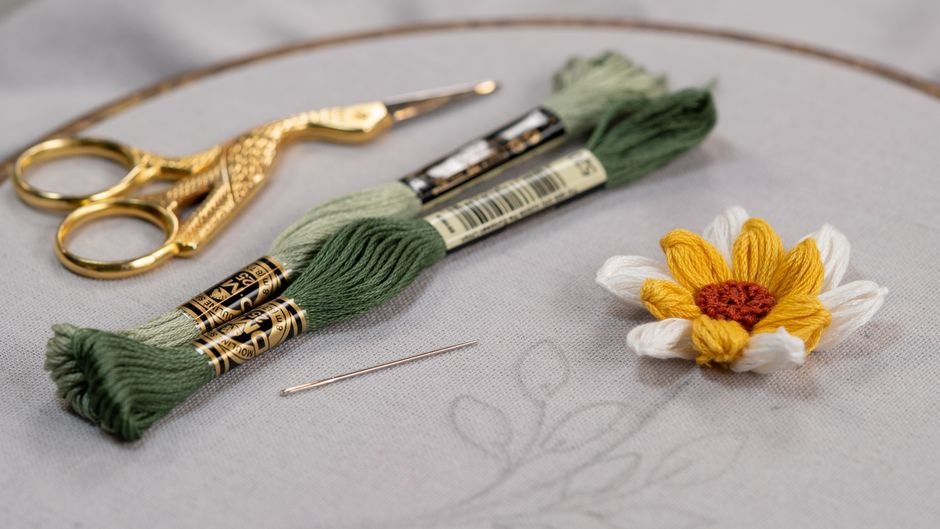
The core embroidery supplies are refreshingly simple. A hoop holds your fabric taut so stitches stay even, and a six or seven inch hoop is a comfortable size for many first projects. Embroidery needles, sometimes labeled crewel needles, have a sharp point and a long eye that makes threading several strands of floss easier. A pack of assorted sizes lets you match the needle to your thread.
Floss is the heart of most hand embroidery. Six-strand cotton floss is the most common choice, and you can separate the strands to make finer or bolder lines. A small pair of sharp scissors, often called embroidery scissors, cuts floss cleanly and is easy to control near your stitches.
Fabric rounds out the list. A tightly woven cotton, linen, or cotton blend gives you a smooth surface that holds stitches neatly. Finally, you’ll want a way to mark your design, such as a water-soluble pen or a transfer method. With these basics in hand, you can stitch almost any beginner pattern, and everything else is an extra you can add over time.
Choosing Embroidery Floss, Thread, and Needles
Choosing floss starts with fiber. Cotton floss is the standard for good reason, since it’s affordable, comes in a huge color range, and is easy to work with. Pearl cotton, a twisted thread that isn’t meant to be separated, gives a raised, slightly glossy line that many stitchers love for outlines and texture. Specialty threads such as metallics, silk, rayon, and variegated floss add shimmer or color shifts, but they can be trickier to handle, so many people save them for accents.
Needles matter more than many beginners expect. Embroidery or crewel needles are sharp and suit most surface stitching on woven fabric. Tapestry needles have a blunt tip and are used for cross stitch and counted work on aida or evenweave, where you’re passing through existing holes. Chenille needles are sharp with a large eye, which helps with thicker threads or wool.
Needle size is a matter of matching the eye to your thread. A larger number usually means a finer needle. If you’re struggling to thread the needle or the floss is fraying as you pull it through, try a size with a larger eye. Our embroidery floss guide goes deeper into floss brands and strand counts.

Fabrics and Stabilizers That Work Well for Embroidery
The fabric you stitch on has a big effect on how your work looks. For surface embroidery, many stitchers like quilting cotton, linen, or a cotton and linen blend. These fabrics have a tight, even weave that supports stitches without letting them sink or pucker. Linen has a lovely natural texture, though it can be a little less forgiving than cotton for beginners.
For counted work like cross stitch, evenweave fabrics and aida are the usual choices. Aida has visible holes in a grid, which makes counting easier, while evenweave and linen offer a finer, more traditional look. You’ll find more on those in our guide to cross stitch cloth.
Stabilizer is the unsung helper of embroidery supplies. It’s a backing that supports lightweight or stretchy fabric so stitches don’t pull or distort. Tear-away and cut-away stabilizers are common for machine embroidery, while lightweight fusible or water-soluble stabilizers are handy for hand stitching on thin fabrics, t-shirts, or tea towels. If your fabric feels flimsy in the hoop, a layer of stabilizer is often the fix.
Hoops, Frames, and Tools That Make Stitching Easier
Hoops come in wood, plastic, and spring-tension styles. Wooden hoops with a screw closure are the classic choice and hold fabric firmly. Plastic hoops are lightweight and often grip well, and some stitchers prefer them for display. Spring-tension hoops are quick to adjust and popular for machine embroidery and smaller hand projects.
For larger pieces, a scroll frame or stretcher bars hold fabric taut over a bigger area, so you don’t have to keep moving a hoop and risk crushing finished stitches. Many cross stitchers move to a frame for big projects, and some like a floor or lap stand that frees both hands.
A few small tools make stitching noticeably easier. A needle threader saves time and eye strain. A needle minder, a small magnet that holds your needle when you set the work down, prevents lost needles. Good lighting is one of the most valuable tools of all, and a daylight style lamp helps you see fine stitches and true colors. Some stitchers also add a magnifier for detailed work. None of these are required, but each can make a session more comfortable.
Storing and Organizing Your Embroidery Supplies
Once your stash grows, storage becomes important. Floss tangles easily if it’s left loose in a bag, so many stitchers wind it onto small cardboard or plastic bobbins and keep them in a divided box, labeled with the color number. Others prefer floss rings, where cut lengths hang from a ring sorted by color. Either system makes it easy to see what you have and avoid buying duplicates.
Protecting fabric is part of storage too. Rolling fabric around a tube or a cardboard core prevents creases that can be stubborn to press out. Store fabric away from direct sunlight to prevent fading, and keep it in a clean, dry place. Avoid leaving work in progress in a hoop for long stretches, since the hoop can leave marks.
Needles and small tools are easy to lose. A needle book or a small tin keeps them together, and a project bag for each piece holds the pattern, floss, and fabric in one place. A tidy system saves time and makes it more inviting to pick your stitching back up after a break.
Embroidery Supplies Worth Upgrading First
Not every supply needs to be top of the line, but a few upgrades make a bigger difference than others. Many stitchers find scissors are the best first upgrade. A sharp, well-made pair cuts floss cleanly and lasts for years, while dull scissors chew the ends and make threading harder.
Lighting is another upgrade that pays off in comfort. A good lamp helps you see fine details and true colors, especially in the evening. A quality hoop that grips fabric firmly is also worth considering, since a hoop that slips leads to loose, uneven stitches.
Floss quality can matter too. Inexpensive floss sometimes tangles, frays, or varies in color between skeins, while established brands tend to be more consistent. That said, preferences vary, and many stitchers happily use budget floss for practice pieces and save premium thread for special projects. Needles, fabric, and storage containers are areas where budget options usually work perfectly well. Upgrading a few key items while keeping the rest simple is a balanced way to grow your embroidery supplies.
Building a Starter Kit Without Overspending
You don’t need to buy everything at once to start stitching. A simple starter kit might include one hoop, a pack of assorted embroidery needles, small scissors, a marking pen, a piece of cotton or linen, and a handful of floss colors chosen for your first design. Buying floss for a specific project, rather than a giant assortment, keeps the cost down and builds your collection naturally.
Another option is to start with a kit. A well-chosen kit bundles the design and supplies together and can be a good value for a first project. Our guide to beginner embroidery kits explains what to look for. Once you’ve finished a project or two, you’ll have a better sense of which supplies you use most and which you can do without.
Every stitcher’s needs are different, so there’s no single right list. Adding supplies as projects call for them is a practical approach that many people find keeps the hobby enjoyable and the stash manageable.
Bee’s Quilt Shop has plenty more to help you stitch with confidence. Explore our Embroidery and Monogramming guides, browse the Embroidery Thread collection for color ideas, and read our guide to embroidery hoops before you pick your first one.
Frequently Asked Questions
What embroidery supplies do I need to start?
Most beginners need a hoop, embroidery needles, six-strand floss, small sharp scissors, and a tightly woven fabric like cotton or linen. A marking pen or transfer method helps you get your design onto the fabric.
What is the difference between embroidery floss and embroidery thread?
Floss usually refers to six-strand cotton that can be separated, while embroidery thread is a broader term that includes pearl cotton, machine embroidery thread, and specialty fibers. For most hand embroidery, six-strand floss is the standard starting point.
What size embroidery needle should I use?
It depends on your thread and fabric. Choose a needle with an eye large enough to thread easily without fraying the floss, and remember that a larger size number usually means a finer needle.
Do I need stabilizer for hand embroidery?
Not always, but stabilizer helps when you’re stitching on thin, stretchy, or loosely woven fabrics. A lightweight fusible or water-soluble stabilizer can keep stitches from puckering on t-shirts or tea towels.
How should I store my embroidery floss?
Many stitchers wind floss onto labeled bobbins and keep them in a divided box, while others use floss rings sorted by color. Bee’s Quilt Shop always recommended labeling each color number so you can match it later.
This article is intended for general educational and informational purposes only and reflects common embroidery practices. Supplies, brands, and materials vary, and results vary by skill level, fabric, and equipment. Bee’s Quilt Shop shares this guide as part of our ongoing library of quilting, sewing, and embroidery resources.