Quick answer: Blanket batting and quilt batting often differ because blankets are usually tied or lightly quilted, while quilts are stitched more densely. Blanket projects tend to need a stable batting rated for wide spacing between ties or stitches, while traditional quilts can use a wider range of battings since the quilting holds the layers together.
Blanket batting sounds like it should be the same thing as quilt batting, and sometimes it is. But the way a project is put together changes what the batting needs to do. A heavily quilted bed quilt holds its batting in place with hundreds of stitches. A tied comforter or a lightly stitched baby blanket relies on the batting itself to stay together between a few widely spaced ties or lines. That difference matters more than many sewists expect.
This guide explains what separates a blanket from a quilt, why blanket projects often need a different batting, and how to choose for tied comforters, baby blankets, and traditional quilts. We’ll also look at a gap many guides skip: when fleece, flannel, or another fabric might work better than batting at all. Finally, we’ll help you decide when your project sits somewhere in between. At Bee’s Quilt Shop, we saw plenty of projects that blurred the line between blanket and quilt, and a little planning always helped them turn out well.
What Separates A Blanket From A Quilt
The line between a blanket and a quilt isn’t strict, but construction is the main difference. A traditional quilt has three layers, a top, batting, and backing, joined by quilting stitches that run across the whole surface at fairly close intervals. Those stitches are both decorative and structural, holding the batting in place so it doesn’t shift or bunch.
A blanket, in the way many sewists use the word, is often secured differently. It might be tied with yarn or thread at intervals, stitched with just a few lines, or sewn around the edges with little or no quilting in the center. Some blankets are made with two layers of fabric and no batting at all. Comforters and duvets fall into this category too, since they’re often puffy, lightly secured, and meant to be cozy rather than intricately stitched. Knowing which way your project leans helps you pick the right batting from the start. If you’re not sure, think about how many stitches will run through the layers.
Why Blanket Batting Often Needs To Do A Different Job
When a project has only a few ties or widely spaced stitches, the batting has to hold itself together across large open areas. Every batting has a recommended maximum distance between quilting or tying points, printed on the package. Some battings allow only a few inches, while others are rated for much wider spacing. For blanket batting, that number becomes one of the most important things on the label.
Daily use adds to the challenge. Blankets get dragged, tossed, washed, and folded often. If the batting isn’t stable enough for the spacing you’ve chosen, it can shift, clump, or tear apart inside, leaving lumps and thin spots. Batting with a scrim or a needle-punched construction tends to hold up better at wider spacing. Polyester batting is often bonded to help prevent fiber migration. Choosing a batting designed for the spacing you plan, rather than the one you happen to have, can make a big difference in how long the blanket lasts. That small check at the store saves a lot of disappointment later.
Batting For Tied Comforters And Knotted Blankets
Tied comforters are a classic way to finish a cozy project quickly. Instead of quilting across the surface, you pull yarn or embroidery floss through the layers at regular intervals and tie it in a secure knot. The result is puffy, soft, and fast, but the batting has to stay intact between ties that may be several inches apart.
For tied projects, many sewists choose a polyester batting with a higher loft, since it’s often bonded to resist shifting and gives the classic puffy look. Some cotton and blend battings with scrim are also rated for wide spacing. The key is matching the tie spacing to the batting’s recommended distance. If you want to tie farther apart, look for batting that specifically allows it. Ties themselves should be secure, with square knots or surgeon’s knots that won’t loosen, and many sewists trim the tails to a consistent length for a tidy look. A small tied sample washed once will show you whether the batting holds up before you tie a whole comforter.
Batting For Baby Blankets And Frequent Washing
Baby blankets tend to be washed often, sometimes very often, so durability and easy care matter. Many sewists choose batting that holds up well to frequent washing and drying, with stable construction that won’t break down over time. Cotton and cotton blend battings are popular choices, and some polyester battings are also known for keeping their shape after many washes.
It’s worth reading care instructions carefully, since some battings handle hot water and high dryer heat better than others. Prewashing the batting and fabric can help you see how they’ll behave before the blanket is finished. For general comfort and safety, follow current guidance from trusted child safety organizations about blankets and young babies, since that guidance can change over time and is best checked directly at the source. From a sewing perspective, choosing batting that stays smooth and intact after repeated washing helps a baby blanket look good for as long as it’s in use, which is often a surprisingly long time.
Batting For A Traditional Quilt
For a traditional quilt with a pieced top and dense quilting, the choice of batting is more flexible. Since the quilting holds the layers together across the whole surface, the batting doesn’t have to carry as much structural weight. That opens the door to cotton, wool, blends, and specialty battings, chosen mostly for feel, warmth, and the look you want.
Quilting method still matters. Hand quilters may prefer battings that are easy to needle, while machine quilters often like cotton for its grip. Loft affects how the quilting texture shows, and fiber affects shrinkage and drape. Our guide on choosing the right batting for your quilt covers these decisions in more detail. The main contrast is that a traditional quilt lets you choose batting based on how you want it to look and feel, while a blanket project often requires you to choose batting based on how it will hold together. Keeping that difference in mind simplifies the decision for both.
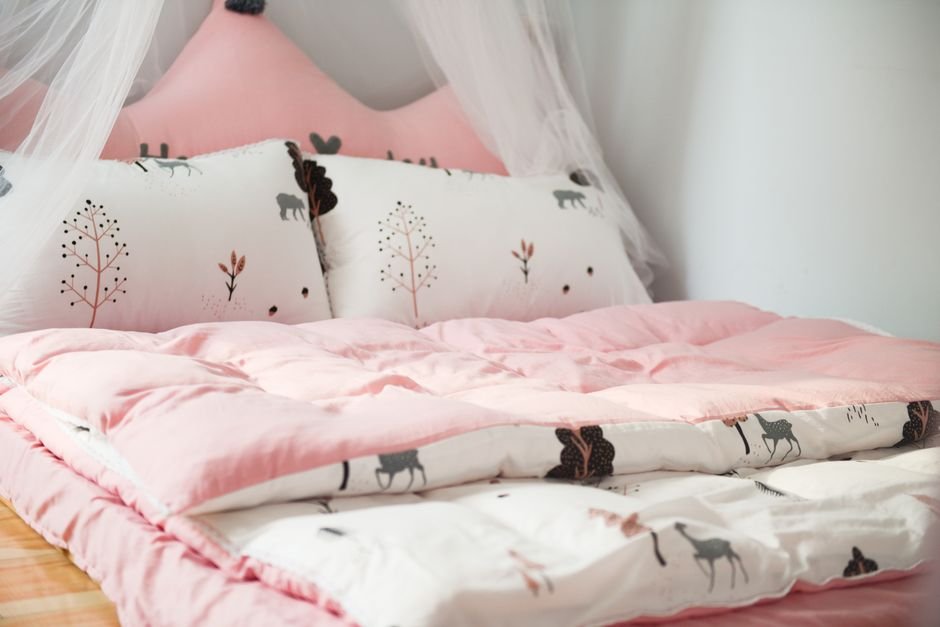
Fleece, Flannel, And Other Blanket Batting Alternatives
Sometimes the best blanket batting isn’t batting at all. Fleece is a popular middle layer for blankets because it’s warm, soft, and doesn’t shift or tear apart the way loose batting can. It’s also a common choice for the backing of a simple two-layer blanket with no batting. Flannel can work as a thin, cozy middle layer too, especially for lightweight summer blankets or quilts meant to drape.
There are tradeoffs. Fleece can stretch and add bulk, so it often helps to use a walking foot and plenty of pins. Flannel shrinks and frays more than quilting cotton, so prewashing is usually recommended. An old wool blanket or a cotton thermal blanket can also serve as a middle layer, giving warmth and a vintage feel. These options can suit blankets that will be tied or lightly stitched, since they hold together on their own. Test a small piece first to see how it handles and washes, just as you would with any new batting.
Choosing Between The Two For A Project That Is Somewhere In Between
Plenty of projects sit somewhere between blanket and quilt, like a lap throw with simple straight-line quilting spaced several inches apart, or a baby quilt that’s pieced but only lightly stitched. In these cases, start with the spacing. Measure the widest gap you plan to leave between quilting lines or ties, then choose a batting rated for at least that distance.
Next, think about use and washing. A throw that lives on the couch and gets washed often needs stable, durable batting. A decorative piece can be more flexible. Then consider feel. If you want puffy and cozy, lean toward higher loft polyester. If you want soft and drapey, lean toward thin cotton or blends. When in doubt, a scrim-backed batting rated for wide spacing is a safe middle choice for many in-between projects. And as always, a quick test sample tells you more than any label, so it’s worth the few minutes it takes.
Whether you’re tying a comforter or quilting a keepsake, Bee’s Quilt Shop has more guides to help you choose. Browse our Fabric Buying and Precuts guides, compare options in our fleece by the yard guide, or explore the Notions collection for tying and finishing supplies.
Frequently Asked Questions
Can I use quilt batting for a tied blanket?
Yes, as long as the batting is rated for the spacing between your ties. Check the package for the maximum distance, and choose a stable batting if your ties will be far apart.
How far apart should ties be on a tied quilt?
Tie spacing should stay within the batting manufacturer’s recommended distance, which varies by product. Many sewists space ties evenly in a grid so the batting is supported across the whole blanket.
Is fleece a good substitute for batting?
Fleece can work well as a middle layer for blankets because it’s warm and doesn’t shift easily. It can stretch and add bulk, so a walking foot and careful pinning help.
What batting holds up best to frequent washing?
Many sewists choose stable cotton, cotton blend, or polyester battings with needle-punched or scrim construction for items that get washed often. Always check the care instructions on the package.
Do blankets need batting at all?
Not always, since some blankets use just two layers of fabric like fleece or flannel. Bee’s Quilt Shop always suggested choosing based on how warm and puffy you want the finished blanket to feel.
This article is intended for general educational and informational purposes only and reflects common sewing and quilting practices. It does not provide medical or child safety advice, so please consult trusted safety sources for that. Results vary by skill level, fabric, and equipment. Bee’s Quilt Shop shares this guide as part of our ongoing library of quilting and sewing resources.