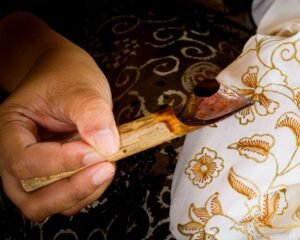

Quick answer: A calico print is a small-scale, all-over floral print, usually on lightweight cotton, with tiny flowers scattered closely across a contrasting background. The name traces back to Calicut in India, where early printed cottons were traded, and in the United States calico now means these small florals, while in Britain the word usually means plain, unbleached cotton.
Calico print is one of those fabrics that instantly brings to mind patchwork quilts, prairie dresses, and cozy country kitchens. Its tiny flowers and cheerful colors have been part of quilting and home sewing for generations, and they still have a special place in many quilters’ stashes today.
This guide explains what a calico print is and shares a short history of calico based on well-documented facts. We’ll look at the types of calico print fabric you’ll find, offer tips for quilting and sewing with calico, and share project ideas. We’ll also cover something many guides blur together, which is how calico differs from ditsy florals and feedsack prints. Finally, we’ll share tips for pairing calico prints with other fabrics. At Bee’s Quilt Shop, calicos were always part of the fabric story, and they’re beloved by both traditional and modern quilters. You can explore more fabric basics in our Fabric Types and Guides section.
What Is Calico Print
A calico print is a small-scale, all-over print, most often featuring tiny flowers. The motifs are usually closely spaced and scattered across the fabric, with a contrasting background color. From a distance, calico often reads as a texture or a solid-looking color, while up close, you can see the individual flowers.
Calico prints are typically found on lightweight, plain-woven cotton, often quilting cotton. The colors can be bright and cheerful, like red, blue, yellow, and green, or soft and muted for a vintage feel. Background colors range from light cream and white to dark navy and black.
It’s worth noting that the word calico means different things in different places. In the United States, calico refers to these small floral prints. In Britain and some other countries, calico usually refers to a plain, unbleached, often coarse cotton fabric, similar to what Americans call muslin. Knowing this difference can help when shopping internationally or reading sewing resources from other countries. In this guide, we use calico in the American sense of a small floral print.
A Short History of Calico
The word calico comes from Calicut, a port city on the southwest coast of India, now known as Kozhikode. Indian cotton textiles, including painted and printed cottons, were traded from this region, and European traders brought them to Europe in the 1600s. These colorful, washable cottons became extremely popular.
Their popularity caused tension with European textile producers. In England, laws known as the Calico Acts, passed in the early 1700s, restricted the import and use of printed cotton fabrics to protect domestic wool and silk industries. Over time, these restrictions were lifted, and printed cottons were produced in Europe, including in England.
In the United States, calico became a staple of everyday clothing and quilting in the 1800s. Printed cottons were affordable and practical, and small floral prints were especially common. Quilters used calico scraps in patchwork quilts, and calico became closely associated with American quilting traditions. Today, calico prints remain popular, both in reproductions of historical fabrics and in modern interpretations. Some historical details vary between sources, so this overview sticks to widely documented points.

Types of Calico Print Fabric
Calico print fabric comes in several types. Quilting cotton calicos are the most common today. They’re medium-weight, tightly woven cottons that are easy to cut, sew, and press, making them ideal for quilts and small projects.
Vintage calicos are fabrics from earlier decades, often found at estate sales, thrift stores, or in inherited stashes. They can be a wonderful addition to scrappy quilts, though their condition and colorfastness vary, so testing is wise.
Reproduction calicos recreate prints from specific historical periods, such as the mid-1800s or the 1930s. They’re popular with quilters who want to make historically inspired quilts, and many fabric companies produce reproduction collections based on antique fabrics.
Modern calicos reinterpret the classic look with fresh colors, simplified flowers, and contemporary backgrounds. They bring calico’s charm into modern quilts and projects. Calico prints also appear on other fabrics, like voile and lawn for garments. Choosing a type depends on the look you want, whether that’s authentic history, vintage charm, or a modern twist on a classic.
Quilting and Sewing with Calico Print
Quilting with calico print fabric is a joy, since calicos are easy to work with and forgiving of small piecing imperfections. Prewashing is a personal choice. Some quilters prewash calicos to manage shrinkage and check for color bleeding, especially with deep reds and vintage fabrics. Others prefer the crispness of unwashed fabric and wash the finished quilt with a color catcher.
Scale is one of calico’s strengths. Because the prints are small, they work well in small pieces, like tiny squares and triangles, where larger prints would lose their motifs. Calicos also work as blenders, adding texture without competing with larger prints.
Matching isn’t usually a concern with calico, since the small, scattered motifs don’t need careful alignment. This makes calico a great choice for beginners. Directional calicos, where flowers grow in one direction, need a little more attention when cutting. Pressing calicos is straightforward, and they hold creases well, which helps with accurate piecing. Whether you’re making a traditional patchwork quilt or a modern design, calico is a reliable, easy fabric to work with.
Projects for Calico Print Fabric
Calico print fabric suits many projects. Quilts are the most classic use. Scrappy patchwork quilts, nine patches, log cabins, and star quilts all look charming in calico. Reproduction calicos are perfect for historically inspired quilts.
Aprons are another favorite. A calico apron has a cheerful, vintage feel and makes a lovely gift. Dresses, blouses, and children’s clothing in calico have a timeless, cottage-style charm, especially in lightweight cottons.
Home decor projects are a natural fit too. Calico curtains, tablecloths, napkins, pillows, and table runners bring a cozy, country feel to a home. Small projects like pincushions, sachets, potholders, and bags are quick and use small amounts of fabric. Calico scraps are wonderful for English paper piecing and appliqué. Many quilters keep a collection of calicos for scrappy projects, since they mix together so easily. Whether you love traditional style or want to add a vintage touch to a modern project, calico offers plenty of possibilities.

Calico Print vs Ditsy Florals and Feedsack Prints
Calico print is often confused with ditsy florals and feedsack prints, and while they overlap, they’re not identical. Calico, in the American sense, refers to small, closely spaced floral prints on cotton, with a history rooted in printed cottons from India and later American everyday fabrics.
Ditsy prints are small, scattered prints, often florals, but they can also include other tiny motifs, like dots, leaves, or shapes. Many modern ditsy florals look a lot like calico, and the terms are sometimes used interchangeably. Ditsy is a broader, more modern term, while calico carries a more traditional, historical feel.
Feedsack prints come from a specific period, roughly the 1920s to 1950s, when animal feed, flour, and sugar were sold in printed cotton sacks. Thrifty homemakers reused the fabric for clothing and quilts. Feedsack prints include florals, but also novelty prints, stripes, and geometrics, often in bright, cheerful colors. Reproduction feedsack fabrics are popular today. Understanding these distinctions helps you find exactly the look you want when shopping.
Pairing Calico Prints with Other Fabrics
Pairing calico prints with other fabrics is part of the fun. Gingham is a classic partner, and calico and gingham together create a cheerful, country look. Solids are another great pairing. A solid pulled from a calico’s colors can be used for sashing, borders, or background, giving the eye a place to rest.
Stripes add contrast and energy. A calico paired with a narrow stripe in a coordinating color can make a quilt or apron feel lively. Larger florals can also work with calicos, especially when the scale is different enough that the prints don’t compete.
When pairing fabrics, think about value contrast. Calicos can be light, medium, or dark, so mixing values helps your design read clearly. Keeping a consistent color palette helps different prints feel cohesive. For more on gingham, our guide to gingham meaning covers its history and style. Calico’s versatility means it plays well with many fabrics, making it a staple worth keeping in any stash.
Bee’s Quilt Shop is happy to help you explore classic quilting fabrics. Explore our Fabric Types and Guides section, browse the Cotton collection, and read our guide to quilting cotton fabrics for more on choosing cotton for quilts.
Frequently Asked Questions
What is a calico print?
A calico print is a small-scale, all-over floral print, usually on lightweight cotton. The flowers are closely spaced and scattered across a contrasting background.
Where does the name calico come from?
The name comes from Calicut, now Kozhikode, a port city in India where printed cottons were traded. European traders brought these fabrics to Europe in the 1600s.
Is calico the same as muslin?
In Britain, calico often means plain, unbleached cotton similar to American muslin. In the United States, calico usually means a small floral print.
Is calico good for quilting?
Yes, calico is a classic quilting fabric. Its small prints work well in small pieces and are forgiving of minor piecing imperfections.
What fabrics go well with calico?
Gingham, solids, and stripes are classic partners for calico. Bee’s Quilt Shop often suggested mixing values for a quilt that reads clearly.
This article is intended for general educational and informational purposes only. Historical details are summarized from widely documented sources and may vary between references. Fabric types and results vary by skill level, fabric, and equipment. Bee’s Quilt Shop shares this guide as part of our ongoing library of quilting and sewing resources.