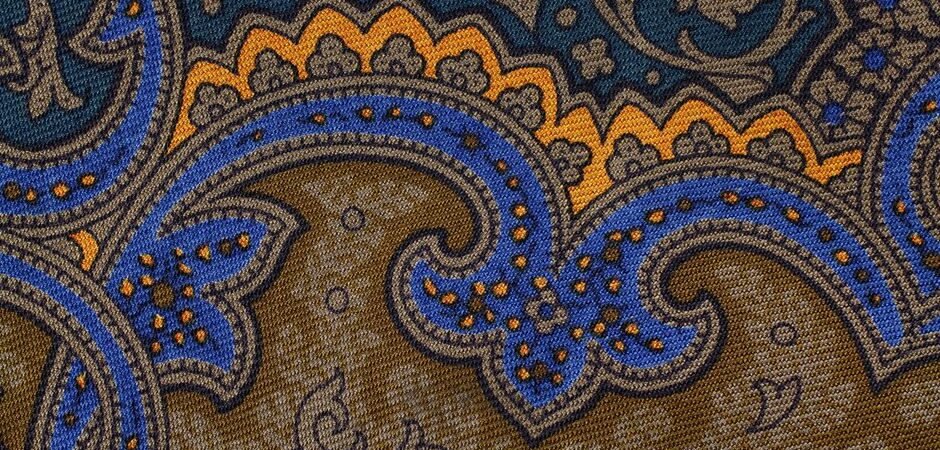
Quick answer: Paisley fabric features the paisley pattern, a curved teardrop motif with a rounded end and a bent tip, often filled with smaller decorative details. The motif has roots in Persian and South Asian design, and it takes its English name from Paisley, a Scottish town that became famous for weaving paisley shawls in the 1800s.
Paisley is one of the most recognizable patterns in the world. Its curving teardrop shapes appear on everything from bandanas and ties to elegant shawls, bohemian dresses, and quilts. Paisley fabric has a way of feeling both classic and fresh, depending on the colors and scale.
This guide explains what paisley fabric is and shares a short history of the paisley pattern, based on well-documented facts. We’ll look at the types of paisley fabric you’ll find, share tips for sewing and quilting with paisley, and explore how to style it in modern projects. We’ll also cover something many guides skip, which is how to judge the scale and colors of paisley fabric when you’re shopping online. Finally, we’ll share ideas for where to use paisley. At Bee’s Quilt Shop, paisley prints were always popular for their rich detail and versatility, and they fit beautifully into many quilts and garments.
What Is Paisley Fabric
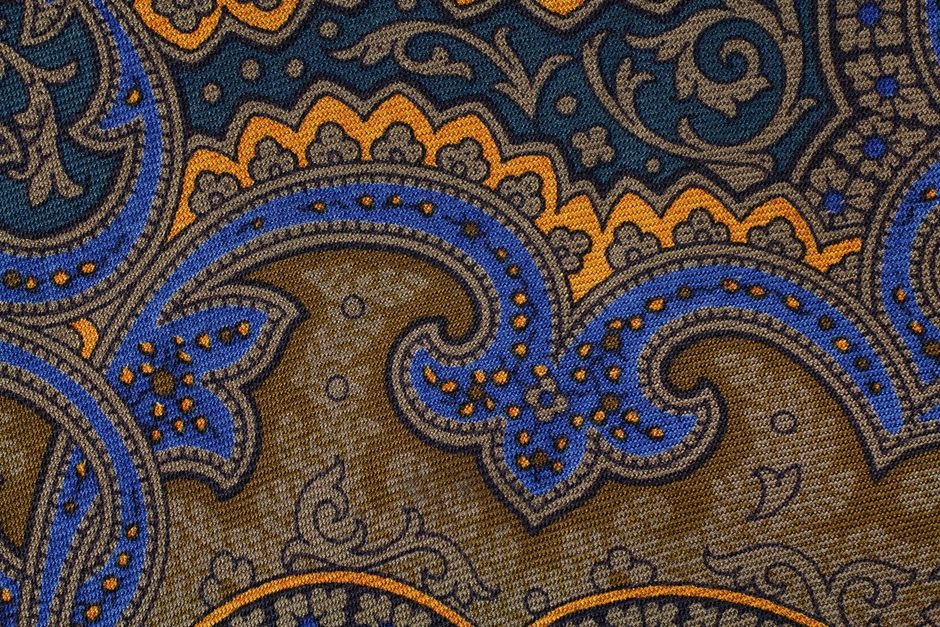
Paisley fabric is fabric printed or woven with the paisley pattern. The paisley motif is a curved, teardrop-like shape with a rounded end and a pointed, often curling tip. It’s sometimes described as resembling a droplet, a leaf, or a seed. The motif is usually filled with smaller decorative details, such as flowers, dots, lines, and swirls, creating an intricate, layered look.
Paisley patterns can feature the motif alone or combined with flowers, vines, and other ornaments. The motifs are often arranged in rows, clusters, or all-over patterns. Some paisleys are bold and graphic, while others are delicate and highly detailed.
The motif is known by other names in different regions. In Persian, it’s often called boteh, and in parts of South Asia, it’s known by names such as buta or ambi. The English name paisley comes from the Scottish town of Paisley, which we’ll explore in the history section. Paisley fabric comes in every color and on many fiber types, from cotton to silk, making it a versatile pattern for many projects.
A Short History of the Paisley Pattern
The paisley motif has roots in Persian and South Asian design, where the boteh or buta motif appeared in textiles, art, and decoration. The motif was especially prominent in Kashmiri shawls, finely woven wool shawls that became highly prized.
In the 1700s and 1800s, Kashmiri shawls were brought to Europe, where they became fashionable and very expensive. European textile manufacturers began producing their own versions to meet demand. The town of Paisley, in Scotland, became one of the most famous centers for producing these shawls in the 1800s, using looms to weave the intricate patterns. The shawls became so associated with the town that the pattern itself took the name paisley in English.
As fashions changed, the popularity of paisley shawls declined, but the pattern endured. In the twentieth century, paisley found new life in bandanas, ties, and the bold fashions of the 1960s and 1970s. Today, paisley remains a classic pattern in fashion, home decor, and quilting. Historical details vary between sources, so this overview focuses on the most widely documented points.
Types of Paisley Fabric
Paisley fabric comes on many types of fabric. Cotton paisley is common and versatile, used for shirts, dresses, and home decor. Quilting cotton paisley is popular with quilters and comes in many colors and scales, making it easy to add paisley to quilts.
Silk paisley has a luxurious sheen and drape, and it’s often used for scarves, ties, and elegant garments. Rayon paisley is soft, drapey, and breathable, making it popular for flowing dresses and blouses.
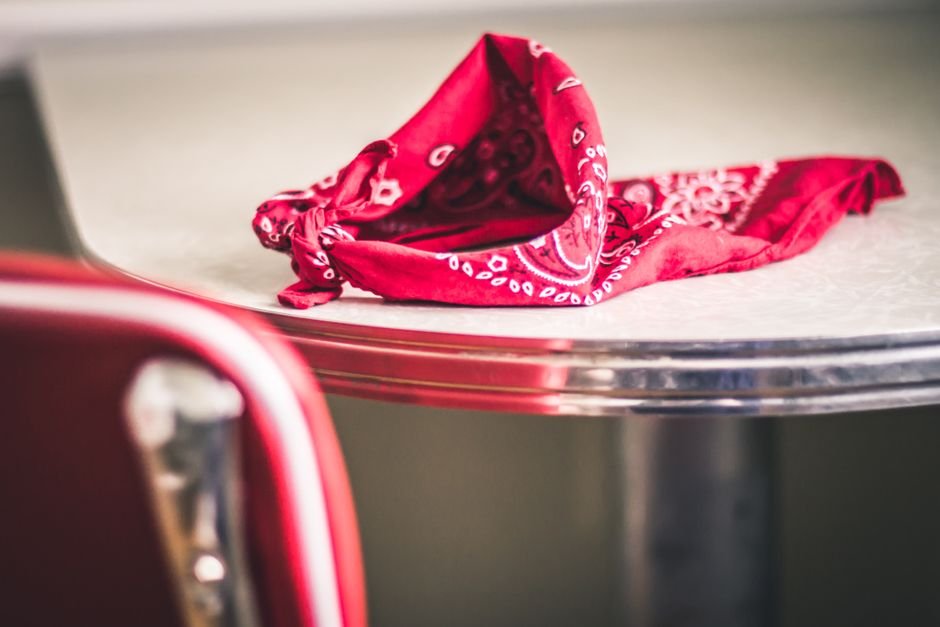
Bandana paisley is a classic style, typically printed on cotton in bold colors like red, navy, and black, with white or contrasting motifs. Bandana prints have a casual, Western, or workwear feel and are popular for accessories, quilts, and casual clothing.
Paisley also appears on wool, as in traditional shawls, and on velvet, chiffon, and knits. The fabric type affects how paisley looks and drapes, so choosing the right base fabric for your project is important. A paisley on silk feels elegant, while the same motif on bandana cotton feels relaxed. Preferences vary, so choose a type that suits your project and style.
Sewing and Quilting with Paisley Fabric
Sewing with paisley fabric is enjoyable, but print scale and layout need some thought. Large paisley motifs can be striking, but they may be cut apart in small pieces. For garments or quilt blocks with small pieces, a smaller-scale paisley often works better. Large-scale paisleys shine in larger pieces, like skirts, borders, and backings.
Matching paisley prints is less critical than matching stripes or plaids, since paisley motifs are often scattered. However, if the paisley is arranged in rows or a regular repeat, matching at seams can make garments look more polished. Buying extra fabric helps with matching.
Directional layouts are another consideration. Many paisley prints have a direction, with motifs pointing a certain way or arranged in rows. Cutting all pieces in the same direction keeps the pattern consistent. Fussy cutting, centering a motif in a quilt block, can highlight a beautiful paisley. In quilting, paisleys work well as feature fabrics or as blenders, depending on scale and color. Planning layout before cutting helps you make the most of paisley’s detail.
Styling Paisley in Modern Projects
Paisley can feel very traditional, but it’s easy to style in modern projects. Choosing paisleys in fresh colors, like soft pastels, bright brights, or monochrome palettes, gives the pattern a contemporary feel. A black and white paisley, for example, looks bold and graphic.
Pairing paisley with solids is one of the simplest modern approaches. A paisley print against a crisp solid background lets the pattern shine without feeling busy. Geometric prints, like stripes or dots, can also create an interesting contrast with paisley’s curves.
In home decor, paisley pillows, curtains, and upholstery can add a bohemian or eclectic touch. Mixing paisley with florals and other patterns in coordinating colors creates a layered, collected look. In fashion, paisley shirts, dresses, and scarves remain classic, and paisley accessories add personality to simple outfits. For quilters, using paisley as an accent, in a border, binding, or a few feature blocks, can add interest to a modern quilt. Paisley’s versatility means it can adapt to many styles.
Reading Scale and Color in Paisley Fabric Online
Shopping for paisley fabric online can be tricky, since paisley prints vary so much in scale and detail. A photo of a fabric may not show how large the motifs actually are. Looking for a ruler or coin in the product photo helps you judge scale. Many retailers include the size of the repeat or the height of the largest motif in the description.
If no scale reference is provided, compare the paisley to other details in the photo, like the selvedge or a folded edge. Some retailers show the fabric on a mannequin or in a finished project, which gives a better sense of scale.
Color can also be hard to judge online. Screen settings and lighting affect how colors appear, and paisleys often include many colors, some of which may not be obvious in a small photo. Zooming in on the image can reveal details. Ordering a swatch, when available, is the most reliable way to check scale and color. Reading reviews and looking at customer photos can help too. Taking these steps reduces the chance of surprises when your fabric arrives.
Where to Use Paisley Fabric
Paisley fabric suits many projects. Bandanas and scarves are classic uses, and making your own bandana from paisley cotton is a quick, satisfying project. Shirts, dresses, skirts, and blouses in paisley have a timeless appeal.
In quilting, paisley can be used as a feature fabric, a border, or a backing. Bandana paisley quilts, made from squares of bandana prints, are a popular project with a casual, Western feel. Paisley also adds detail to scrappy quilts and pairs well with florals.
Home decor projects include pillows, curtains, table runners, napkins, and upholstery. Paisley adds richness to bedding and throws. Accessories like bags, pouches, and headbands are small projects that show off paisley well. Paisley fabric is also popular for costumes and bohemian-style fashion. Whatever you choose, paisley’s intricate detail adds visual interest and personality. For more fabric ideas, our Fabric Types and Guides section explores many other patterns and materials.
Bee’s Quilt Shop is here to help you explore classic patterns like paisley. Explore our Fabric Types and Guides section, browse the Fabric collection for coordinating prints, and read our guide to calico print fabric for another timeless pattern.
Frequently Asked Questions
What is paisley fabric?
Paisley fabric features the paisley pattern, a curved teardrop motif often filled with intricate details. It comes on many fabrics, including cotton, silk, and rayon.
Why is it called paisley?
The English name comes from Paisley, a town in Scotland that became famous for weaving paisley shawls in the 1800s. The motif itself has roots in Persian and South Asian design.
Is paisley fabric good for quilting?
Yes, paisley works well as a feature fabric, border, or backing. Smaller-scale paisleys suit small pieces, while larger paisleys shine in bigger areas.
How do I know the size of a paisley print online?
Look for a ruler or coin in the photo, or check the description for the repeat size. Bee’s Quilt Shop always suggested ordering a swatch when scale matters.
What goes well with paisley fabric?
Solids, florals, and simple geometric prints pair well with paisley. Choosing coordinating colors helps keep the look cohesive.
This article is intended for general educational and informational purposes only. Historical details are summarized from widely documented sources and may vary between references. Fabric types and results vary by skill level, fabric, and equipment. Bee’s Quilt Shop shares this guide as part of our ongoing library of quilting and sewing resources.