Quick answer: A quilting pantograph is a long, printed paper pattern of a continuous design that a longarm quilter traces with a laser or stylus to stitch the same motif in rows from one edge of the quilt to the other. It creates even, all-over quilting without freehand drawing, and it’s mainly used on longarm and frame-mounted machines.
If you’ve ever admired a quilt covered in even, flowing quilting from edge to edge, there’s a good chance it was stitched using a quilting pantograph. Pantographs are one of the most popular ways longarm quilters create consistent, all-over designs, and they make beautiful quilting possible even for quilters who don’t feel confident drawing freehand.
This guide explains what a quilting pantograph is, how it works on a longarm machine, and how it compares to freehand and computerized quilting. We’ll look at choosing a design and size, honestly answer whether you can use a pantograph on a home sewing machine, and share tips for handling and storing paper patterns. We’ll also cover something many guides skip: the difference between paper pantographs and digital edge-to-edge designs. At Bee’s Quilt Shop, longarm quilting was a big part of the shop’s history, and pantographs were one of the most common ways quilts got finished.
What A Quilting Pantograph Is
A quilting pantograph, often called a panto, is a long strip of paper printed with a continuous quilting design. The design is usually a repeating motif, such as loops, swirls, leaves, stars, or geometric shapes, arranged in a row. It’s used to quilt the same design across the whole quilt, row by row, from one edge to the other. That’s why pantograph quilting is often called edge-to-edge or all-over quilting.
Pantographs are designed for longarm quilting machines and other frame-mounted setups, where the machine moves over a quilt stretched on a frame. The paper pattern lies on a table behind or beside the machine, and the quilter follows the design with a pointer while the machine stitches the same shape onto the quilt. Because the design is continuous, the machine can stitch long rows without stopping. The result is even, consistent quilting across the whole quilt, which is especially popular for bed quilts, charity quilts, and busy patchwork where custom quilting isn’t needed. It’s also a practical choice when a quilt needs to be finished efficiently without giving up an attractive, even texture.
How A Quilting Pantograph Works On A Longarm Machine
A quilting pantograph works on a longarm by letting the quilter trace the printed design while the machine stitches. The quilt is loaded on the frame, with the backing, batting, and top rolled onto rails. The paper pantograph is placed on a table at the back or side of the machine, often under a clear protective sheet.
The quilter uses a laser pointer or a stylus attached to the machine. As the quilter moves the machine, the laser dot or stylus follows the printed line on the paper, and the needle stitches the same path on the quilt. When one row is finished, the quilter advances the quilt on the frame and lines up the next row, often nesting the design so the rows interlock neatly. Keeping the pointer on the line and moving at a steady pace helps the stitches look smooth. Many quilters practice tracing the design with a finger first to learn its path before stitching. This approach makes even, professional-looking quilting possible without drawing freehand.
Pantograph Vs Freehand Vs Computerized Quilting
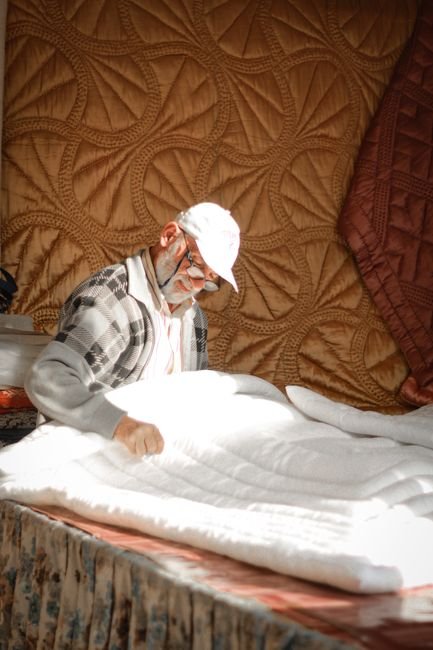
There are three common approaches to longarm quilting, and each has strengths. Pantograph quilting uses a printed pattern traced from the back or side of the machine. It gives consistent, edge-to-edge designs and is a good way to learn machine control without needing freehand drawing skills. It does require careful tracing and row alignment.
Freehand quilting, often done from the front of the machine, lets the quilter draw designs directly onto the quilt without a pattern. It offers creative freedom and can be customized to each quilt, but it takes practice to make designs look even. Computerized quilting uses a computer system to guide the machine automatically, stitching designs from digital files. It’s precise and consistent, and it frees the quilter from tracing, though it requires a computerized system and some setup. None of these approaches is best for everyone. Many longarm quilters use all three, depending on the quilt, the customer’s wishes, and the look they want.
Choosing A Pantograph Design And Size
Choosing a pantograph design starts with the quilt’s style and use. A traditional quilt might suit feathers, florals, or gentle swirls, while a modern quilt might look great with geometric or linear designs. A child’s quilt might call for playful shapes, while a masculine quilt might suit straight lines or angular motifs.
Size and density matter too. Pantographs come in different row heights, often listed in inches. A smaller row height creates denser quilting, which adds more texture and stiffness. A larger row height creates more open quilting, which is softer and faster to stitch. Consider the quilt’s use. A bed quilt that will be washed often may benefit from moderate density, while a decorative quilt might suit a more open design. Check your batting’s recommended quilting distance to make sure the design’s spacing fits. Many quilters keep a few favorite pantographs in different sizes and styles so they can choose the right one for each quilt.
Can You Use A Pantograph On A Home Sewing Machine
Using a true pantograph on a home sewing machine is limited. Pantographs are designed for machines that move over a quilt on a frame, and a standard home machine sitting on a table doesn’t work that way. With a home machine, you move the quilt under the needle, so there’s no way to trace a paper pattern with a pointer in the same manner.
That said, some setups make it possible. Some home and mid-arm machines can be mounted on a quilting frame, which lets the machine move over the quilt. Some of these frame setups are designed to work with a laser or stylus attachment, which can be used to trace pantographs, according to manufacturers’ product information. The size of the machine’s throat space limits how tall each row can be. If you’re considering this, check the frame and machine specifications carefully and confirm compatibility with the manufacturer. For many home quilters, edge-to-edge quilting is more commonly done with free-motion meandering or with stencils and marked designs instead.
Paper Pantographs Vs Digital Edge-To-Edge Designs
Here’s a topic many pantograph guides skip: the difference between paper pantographs and digital edge-to-edge designs. Paper pantographs are printed patterns traced by hand with a laser or stylus. They’re affordable, don’t require a computer, and many quilters enjoy the hands-on process of tracing.
Digital edge-to-edge designs are files used with computerized quilting systems. The computer guides the machine to stitch the design automatically, so the quilter doesn’t trace. Many designs are available in both formats, though some exist only as one or the other. Digital designs can often be resized and adjusted on the computer, which makes fitting them to a quilt easier, while paper pantographs come in fixed sizes. Paper pantographs don’t need special software, but they do require skill and attention while tracing. If you’re shopping for designs, check which format you need and whether the file type works with your system. Both produce beautiful edge-to-edge quilting, and the choice depends on your setup and preferences.
Handling And Storing Paper Pantograph Patterns
Paper pantographs are long and can be delicate, so a little care helps them last. Many quilters cover the pantograph with a clear plastic or acrylic sheet while using it, which protects the paper from wear and keeps it flat. Taping the ends down lightly helps keep it from shifting while you trace.
When storing, roll pantographs loosely around a tube rather than folding them, since creases can make the line harder to follow. Store rolled patterns in tubes or long boxes, labeled with the design name and row height so you can find them easily. Keep them in a dry place away from sunlight, which can fade the printed line over time. If a pantograph gets damaged, some designers offer replacement copies, but check their terms. Some quilters make a working copy for personal use if the designer allows it, keeping the original safe. With good care, a collection of pantographs can serve you for many quilts, and many longarm quilters find their favorite designs become old friends they return to again and again.
Pantographs make beautiful edge-to-edge quilting achievable, and Bee’s Quilt Shop has more guides to help you finish your quilts. Explore our Notions and Tools section, read about hand quilting vs machine quilting, or browse the Patterns collection for project ideas.
Frequently Asked Questions
What is a pantograph in quilting?
A pantograph is a long paper pattern of a continuous quilting design that a longarm quilter traces to stitch rows across a quilt. It creates even, edge-to-edge quilting.
Do I need a longarm to use a pantograph?
Pantographs are designed for longarm and frame-mounted machines. Some home and mid-arm machines on frames can use them with a laser or stylus, so check compatibility.
What row height should I choose for a pantograph?
Smaller row heights create denser quilting, while larger ones create more open designs. Choose based on the quilt’s use and your batting’s recommended spacing.
Is pantograph quilting good for beginners?
Many longarm beginners start with pantographs because tracing a printed line is easier than freehand drawing. It still takes practice to trace smoothly and align rows.
What’s the difference between a pantograph and computerized quilting?
A pantograph is traced by hand, while computerized quilting guides the machine automatically from a digital file. Bee’s Quilt Shop always saw both as great options, depending on the quilter’s setup.
This article is intended for general educational and informational purposes only and reflects common quilting practices. Machine and frame compatibility, pattern formats, and usage terms vary by manufacturer and designer, so please confirm details before buying. Results vary by skill level, fabric, and equipment. Bee’s Quilt Shop shares this guide as part of our ongoing library of quilting and sewing resources.