Quick answer: Charmeuse bridal satin is a top choice for wedding dresses because of its liquid drape and soft, glowing sheen, which comes from a satin weave with mostly float-side threads facing outward. It photographs beautifully and moves with the body in a way many other bridal fabrics can’t quite match, though its slippery hand does make it more challenging to sew than a stiffer satin. Working with it successfully comes down to using the right needle and stitch settings, stabilizing seams that want to shift, and, for a DIY bridal project, testing your pattern thoroughly in muslin before ever cutting into the real yardage.
Charmeuse bridal satin shows up again and again on our shelves during engagement season, and it’s easy to see why once you feel it draped over your hand. Here at Bee’s Quilt Shop and Studio, we get a steady stream of brides and family members planning to sew their own wedding gown, and charmeuse bridal satin is almost always the fabric that catches their eye first for its glow and movement. It’s also, honestly, one of the more intimidating fabrics to commit to for a project as significant and irreversible as a wedding dress. Let’s cover what makes charmeuse bridal satin different from other bridal fabrics, how to choose between silk and polyester versions, and what it actually takes to sew your own bridal gown successfully from start to finish.
What Makes Charmeuse Bridal Satin Different
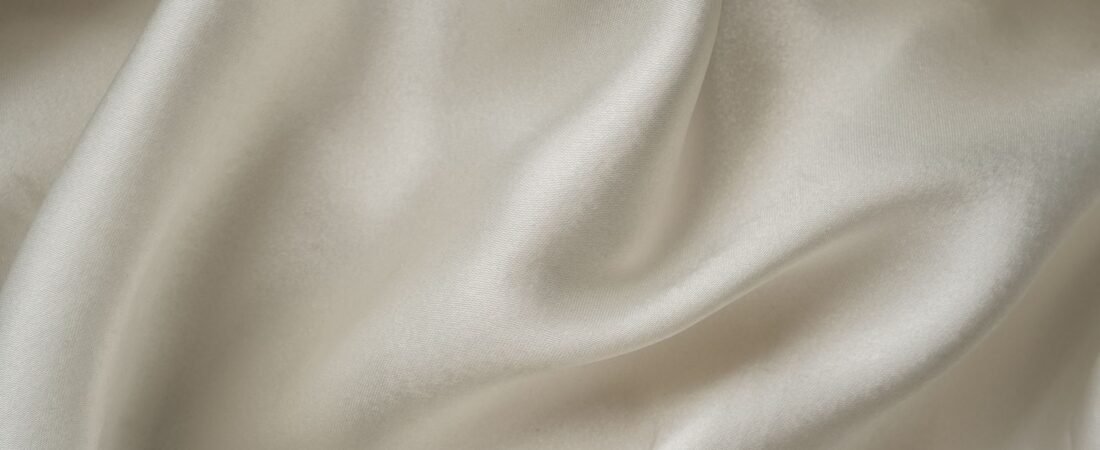
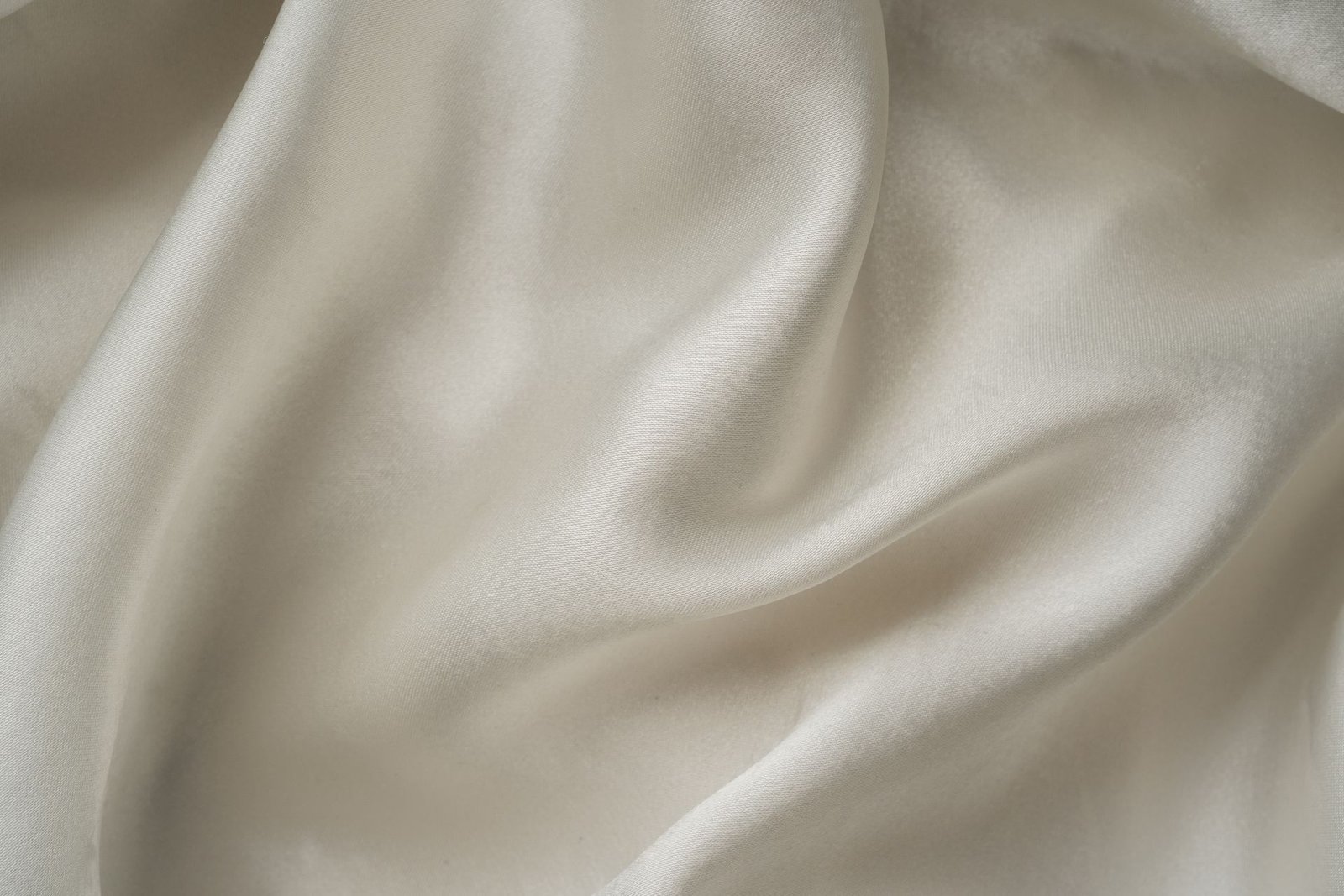
Charmeuse is a specific type of satin weave, built with a high thread count where most of the threads float across the surface, creating that glossy, almost liquid front side while the back stays matte and slightly duller. What sets charmeuse apart from other bridal satins, like a stiffer duchesse satin or a crisper Mikado, is its exceptional drape, charmeuse hangs and moves with the body rather than holding a structured shape, which is why it’s often chosen for slip-style gowns, bias-cut skirts, and soft, flowing silhouettes. Other bridal satins have their own place too, duchesse satin holds structure well for a fuller ball gown skirt, while charmeuse is the fabric of choice when the goal is movement and a close, body-skimming fit. That drape comes at a cost in the sewing room though, charmeuse is genuinely one of the more slippery fabrics you can work with, which is worth knowing before you commit a full bridal budget to yardage.
Why Charmeuse Bridal Satin Is So Popular for Wedding Gowns
The combination of drape and sheen is really what sells charmeuse bridal satin for wedding gowns specifically, it catches light in a soft, glowing way rather than the harder shine you get from a stiffer satin, which photographs beautifully in both natural and flash lighting. On the body, charmeuse moves with every step, creating that romantic, almost fluid silhouette a lot of brides picture when they imagine their dress, especially for slip dresses, bias-cut gowns, and soft cowl necklines. It’s also comfortable to wear for a full day of celebrating, its smooth, cool hand against the skin is a real advantage over stiffer bridal fabrics during a long wedding day, particularly for a warm-weather or destination wedding. Many brides find that charmeuse works beautifully as an underlayer beneath lace or illusion fabric too, letting the lace’s texture show through a soft, glowing base rather than a flat white lining.
Silk Versus Polyester Charmeuse for Bridal Use
Silk charmeuse is the traditional, luxury option, prized for its natural sheen, breathability, and the way it drapes with a certain weight and fluidity that’s genuinely hard to replicate synthetically, though it comes with a higher price tag and more delicate care requirements. Polyester charmeuse has come a long way in recent years and offers a very similar look and drape at a fraction of the cost, along with easier care and more colorfastness, which makes it a practical choice for a lot of DIY bridal budgets. Under close inspection and in certain lighting, polyester charmeuse can look slightly flatter or more uniformly shiny compared to silk’s more organic, subtly varied sheen, though most sewists find the difference isn’t obvious in photos or from a normal viewing distance. Silk also breathes better against the skin, which matters more for an outdoor or summer wedding, while polyester charmeuse holds up better to travel, packing, and general handling during a long day of dress changes and photos. Neither option is objectively wrong for a wedding gown, the choice really comes down to budget, climate, and how much natural fiber matters to you personally. It’s worth handling both side by side under the same lighting before deciding, since photos and online descriptions rarely capture the subtle difference in weight and movement between the two, and a lot of brides find their preference shifts once they actually feel each one draped over a hand.
General Sewing Considerations for Charmeuse Bridal Satin
Charmeuse’s slipperiness is the first thing to plan around, it shifts and slides during cutting and sewing far more than a quilting cotton would, so pattern weights and a rotary cutter on a stable surface work much better than pinning and shears. A fine, sharp needle, typically a size 60 or 70 universal or a specialty microtex needle, helps avoid snags and pulls in the delicate fibers, paired with a fine polyester or silk thread that won’t overpower the fabric’s soft hand. Seam finishing matters more on charmeuse than on a lot of other fabrics, since it frays readily, a French seam or a narrow serged edge keeps raw edges from unraveling inside a garment that’s meant to last through an entire wedding day. Stitch length and tension usually need adjusting too, a slightly longer stitch length and a lighter tension setting help prevent the fabric from puckering along the seam line, and testing on a scrap before sewing the real seam is always worth the extra few minutes.
Sewing Your Own Bridal Gown in Charmeuse Satin
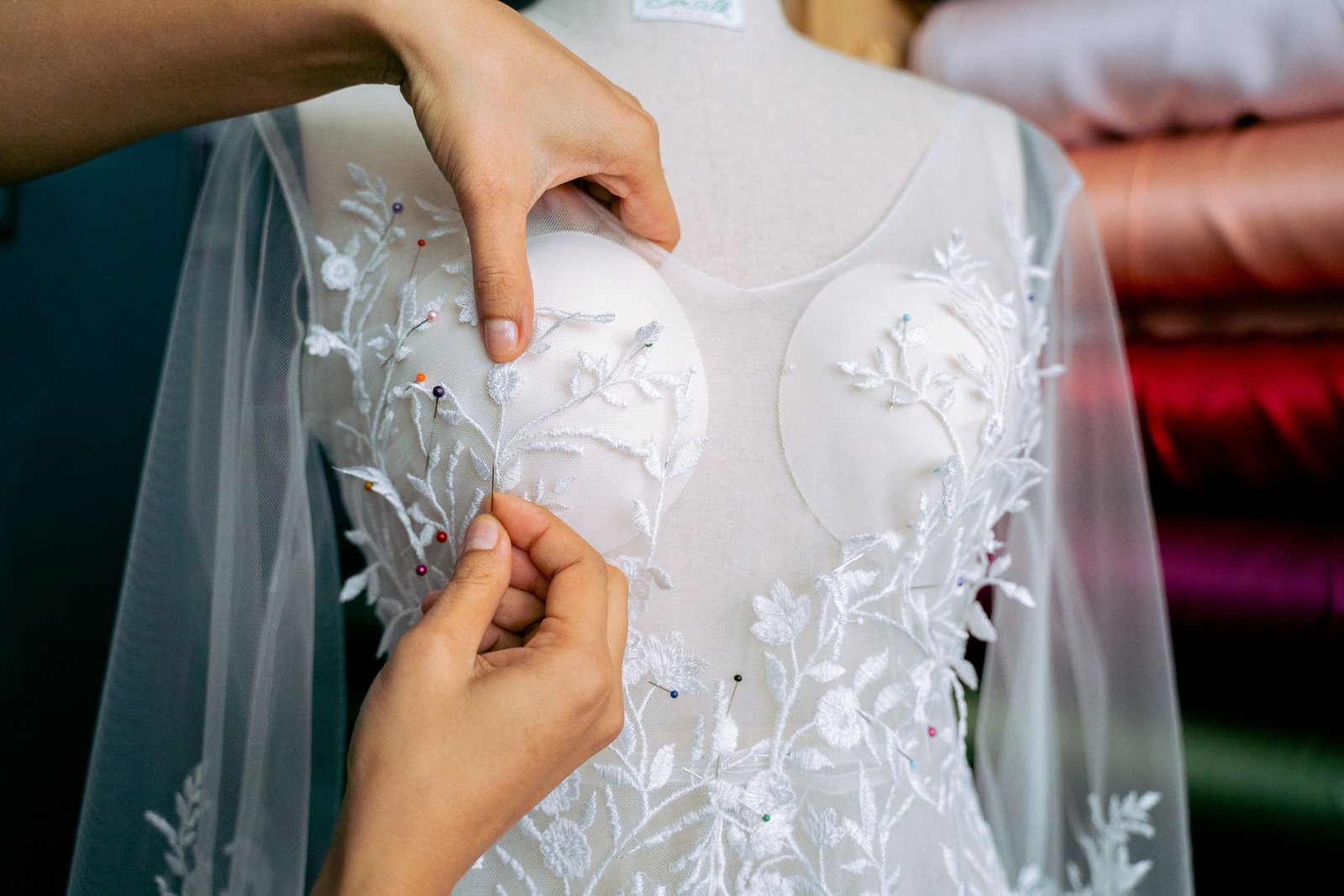
Muslin testing isn’t optional for a bridal gown project, sewing a full test version in a similarly weighted, inexpensive fabric lets you check fit, adjust the pattern, and work out construction questions before touching the real charmeuse. Underlining is worth seriously considering too, a layer of silk organza or a lightweight lining fabric stitched to the wrong side of each charmeuse piece before construction adds opacity and stability without changing the drape much, which solves charmeuse’s tendency to be a little sheer and slippery on its own. Construction order matters more on a slip-style bridal gown than on a lot of garments, generally working from smaller, more controlled seams like darts and princess seams before tackling larger, more slippery seams like the side seams and hem helps keep the whole garment aligned as you go. Hemming a bias-cut charmeuse gown usually calls for letting the dress hang for at least 24 hours before marking the final hem, since bias-cut fabric continues to drop and stretch slightly under its own weight for a day or two after construction. Taking your time through each of these stages, rather than rushing toward a deadline, genuinely makes the difference between a gown that looks handmade and one that looks professionally finished. Many brides also find it helpful to build in a fitting session partway through construction, before final hemming and closures are added, so any last adjustments can be made while the garment is still forgiving to work with.
Budgeting and Yardage for a DIY Bridal Project
Charmeuse bridal satin typically runs anywhere from moderate to fairly high per yard depending on whether you choose silk or polyester, with silk charmeuse commanding a noticeably higher price than its polyester counterpart. Yardage for a full gown with a train varies a lot by design, but a simple slip-style gown might need somewhere in the range of six to eight yards, while a fuller silhouette or a longer train can push that considerably higher, so checking your specific pattern’s yardage requirements before shopping saves a lot of guesswork. It’s smart to buy a bit more than the pattern calls for, especially with charmeuse, since its slippery nature and directional sheen mean pattern pieces sometimes need recutting, and a small buffer of extra fabric avoids the stress of running short partway through a wedding-critical project. Budgeting for underlining fabric, interfacing, and thread on top of the charmeuse itself is easy to forget but adds up, so it’s worth pricing out the full materials list rather than just the headline fabric cost. In our experience, giving yourself a little financial and time cushion beyond your first estimate makes the whole process considerably less stressful as the wedding date approaches. Ordering all your fabric in one purchase rather than in batches is also worth doing when possible, since dye lots can vary slightly between production runs and a mismatched second order is a frustrating problem to discover partway through cutting.
If you’re planning a bridal project, we’d love for you to feel our charmeuse bridal satin selection in person at Bee’s Quilt Shop and Studio, 1975 Old Moultrie Road in St. Augustine, FL, or browse our fabric collection online to start planning. Our team has 75 years of combined sewing and quilting experience and we’re happy to help you think through fabric choice, yardage, and construction before you cut into your gown.
Frequently Asked Questions
Can a beginner sewist realistically make their own wedding dress from charmeuse?
It’s ambitious but not impossible, charmeuse is a genuinely challenging fabric due to its slipperiness, so a beginner should expect to spend real time practicing on scraps and a full muslin before starting the real gown. Many first-time bridal sewists find success by choosing a simpler slip-style pattern rather than a heavily structured design for their first attempt.
How much fabric is typically needed for a full-length gown?
It varies quite a bit by design, but a simple slip-style gown often needs around six to eight yards, while a fuller skirt or a longer train requires more. Checking the specific yardage requirement on your chosen pattern before buying is the most reliable way to know, since designs vary widely.
Does polyester charmeuse look obviously cheaper than silk in photos?
Not usually, most people can’t tell the difference between silk and polyester charmeuse in wedding photos, since both share a similar soft sheen and drape. Up close and under direct handling there’s a subtle difference in hand and movement, but from a normal viewing distance or in photographs, the two look remarkably similar.
How do you prevent snags and pulls while sewing charmeuse?
A fine, sharp needle and gentle handling go a long way, along with keeping rings, watches, and rough-edged tools away from the fabric while you’re working with it. At Bee’s Quilt Shop and Studio, we also recommend keeping your work surface and hands clean and smooth, since even small snags can pull a visible thread in delicate charmeuse.
Does charmeuse bridal satin need to be dry cleaned?
Silk charmeuse generally does require dry cleaning to preserve its finish and drape, while some polyester charmeuse can be gently hand washed, though checking the specific fabric’s care recommendations is the safest approach. For a finished bridal gown, most people opt for professional cleaning and preservation regardless of fiber content, simply to protect such a significant garment.
This article is intended for general educational and informational purposes only, based on common sewing and crafting practices and the hands-on experience of our staff at Bee’s Quilt Shop and Studio. Fabric behavior, yardage needs, and care requirements can vary between manufacturers and patterns, so we recommend checking your specific pattern’s requirements and testing a scrap before starting a full project.