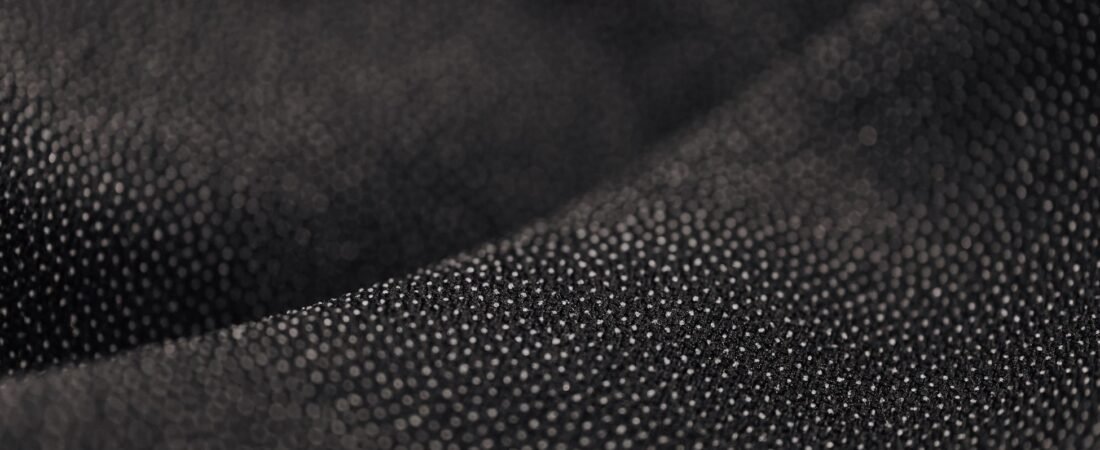
Quick answer: Neoprene fabric is a soft, spongy synthetic rubber material, often laminated to a layer of jersey or knit fabric on one or both sides, that’s prized for its flexibility, insulation, and water resistance. To the touch it feels dense yet cushiony, similar to a thick foam sponge with a smooth knit surface, and it holds its shape without much stretch recovery loss. It’s most commonly used for wetsuits and other water gear, but sewists and crafters also use it for bags, laptop sleeves, phone cases, orthopedic supports, and structured garment pieces like collars and waistbands.
If you’ve ever picked up a swatch of neoprene fabric at a fabric shop and wondered what exactly you were holding, you’re not alone. It shows up everywhere from wetsuits to designer handbags to structured skirts, but most of what’s written about it online is aimed at manufacturers, not the person standing at a cutting table wondering if their home machine can even handle it. Here at Bee’s Quilt Shop and Studio, we get asked about neoprene fairly often, usually from someone who’s seen a project online and wants to know if it’s realistic to try at home. Short answer: yes, and it’s actually a fun fabric to work with once you know a few tricks. Let’s walk through what neoprene fabric actually is, how it feels compared to fabrics you already know, and how to sew it successfully in your own sewing room.
What Is Neoprene Fabric, Exactly?
Neoprene fabric is a type of synthetic rubber, specifically polychloroprene, that’s been engineered into a soft, flexible sheet material. Unlike woven cottons or quilting fabrics that are made from threads crossed over each other, neoprene starts as a foamed rubber core, essentially a rubber sponge full of tiny closed air cells, and that’s what gives it its cushiony, insulating quality. Most neoprene sold for sewing and crafting has a thin layer of fabric, usually a knit jersey or a smooth scuba-style knit, bonded to one or both sides of that rubber core. That fabric layer is what actually touches your machine’s presser foot and feed dogs, and it’s a big part of why neoprene sews more like a stable knit than like a rubber sheet. In our shop, when customers ask what neoprene fabric is, we usually describe it as “a foam sandwich with fabric bread,” which tends to make it click. The rubber core is also what gives neoprene its insulating properties, the same closed-cell structure that traps air and keeps a wetsuit warm in cold water is exactly what makes neoprene useful for laptop sleeves and phone cases, where a bit of cushioning and temperature buffering genuinely helps protect what’s inside.
How Neoprene Fabric Is Made
The manufacturing process for neoprene fabric isn’t something you need a chemistry background to understand. Raw polychloroprene rubber is foamed under heat and pressure, which creates that spongy, air-filled structure, then it’s sliced into sheets of a consistent thickness. Those rubber sheets are then laminated, essentially glued and pressed, to knit fabric facings, which is what turns industrial foam rubber into something you can actually cut with fabric shears and stitch on a machine. The thickness of that rubber core and the type of fabric facing used are what create all the different weights and finishes you’ll see on the bolt, which we’ll get into below. The short version: it’s rubber foam wearing a fabric jacket, and that combination is exactly why it behaves so differently from anything else in your stash. The lamination step is also where color and pattern come in, since the fabric facing can be dyed or printed before it’s bonded to the rubber core, which is why you’ll find neoprene in solid colors, prints, and even metallic or holographic finishes despite the core itself always starting out as plain black or gray rubber foam.
How Neoprene Feels to the Touch (And to Sew With)
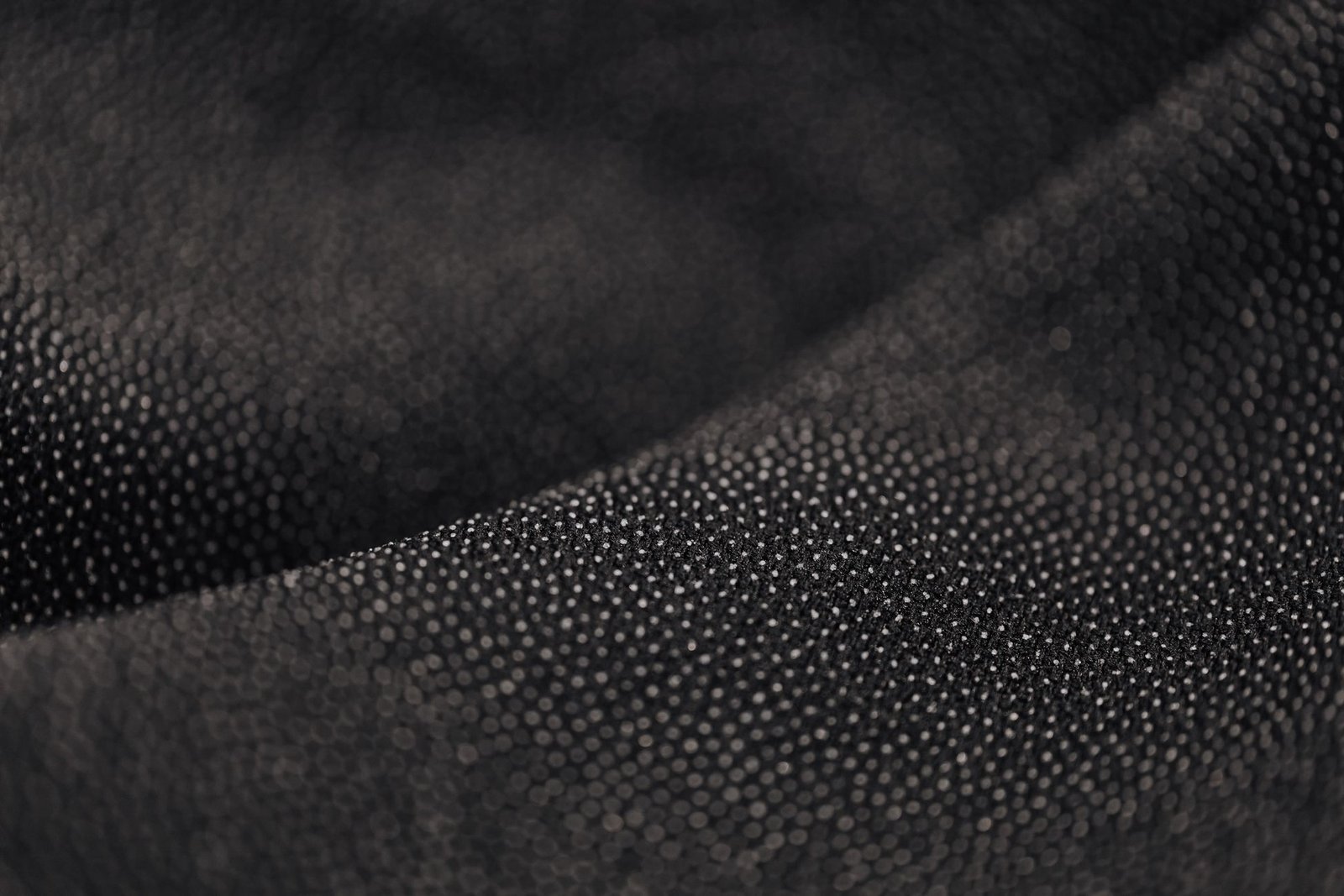
If you’ve sewn with ponte knit or thick polar fleece, neoprene will feel familiar in some ways and surprising in others. Like ponte, it has a smooth, slightly stretchy knit surface, but underneath that surface it’s noticeably thicker and springier, more like pressing on a yoga mat than pressing on fabric. Most sewists describe the hand-feel as dense but pliable, it doesn’t drape like fleece and it won’t flop over your hand the way a knit jersey does. Instead it holds a curved shape on its own, which is part of why it’s so popular for structured bag panels and fitted garment pieces. Under the needle, it behaves more like a stable double-sided knit than a woven, it doesn’t fray, and it doesn’t need much stabilizing. Many sewists find that once they stop treating it like a delicate specialty fabric and start treating it more like a thick, well-behaved knit, neoprene fabric stops feeling intimidating fairly quickly. It also has a noticeable bounce-back quality that fleece and ponte don’t share, press a finger into a piece of neoprene and it slowly returns to shape rather than staying compressed, which is part of why it holds up so well as cushioning in bags and cases over repeated use.
Neoprene Weights and Types You’ll Find
Not all neoprene fabric is created equal, and the weight you choose matters a lot for your project. Lighter weights, often listed around 1.5mm to 2mm thick, are more flexible and easier to sew on a standard home machine, and they work well for bags, pouches, and garment accents. Mid-weight neoprene, closer to 3mm, is what most wetsuit-style projects and structured bag bodies call for, offering more cushioning and body. Heavier weights beyond that start getting harder to manage on a regular machine and are generally better left to specialty or industrial equipment. You’ll also see variations in the fabric facing, some neoprene has a smooth scuba-knit finish on both sides, some has a textured or brushed finish on one side, and some is printed or has a metallic or holographic coating bonded to the surface. When you’re shopping, it helps to know your project first, then let that guide which weight and finish you pick up. Color and pattern selection follows the same logic, a solid neoprene in a classic color works well for a structured everyday bag, while a bold print or metallic finish tends to shine more on a smaller accessory where it becomes the focal point rather than a background material.
Common Uses for Neoprene Fabric
Neoprene fabric shows up in a wider range of projects than most people expect. On the fashion side, it’s used for structured skirts, fitted jackets, statement collars, and accent panels because it holds shape without needing heavy interfacing. Accessory makers love it for laptop sleeves, tablet cases, phone pouches, and wine bottle carriers, since the foam core provides built-in cushioning and a bit of water resistance. Bag makers use it for structured tote panels, zipper pouches, and cosmetic bags where a little bit of stiffness and bounce-back is a feature, not a flaw. Around the house, people make neoprene coasters, trivets, oven mitts, and even seat cushion covers. Quilters and mixed-media crafters sometimes bring it into art quilts or wall hangings as a textural accent alongside more traditional cottons, which is a fun way to play with contrast in hand-feel and structure. Pet accessories are another niche but genuinely popular use, neoprene’s water resistance and cushioning make it a solid choice for dog collars, harnesses, and travel bowls that need to hold up to daily wear and the occasional splash.
Sewing Neoprene at Home: Needles, Stitches, and Seam Finishing
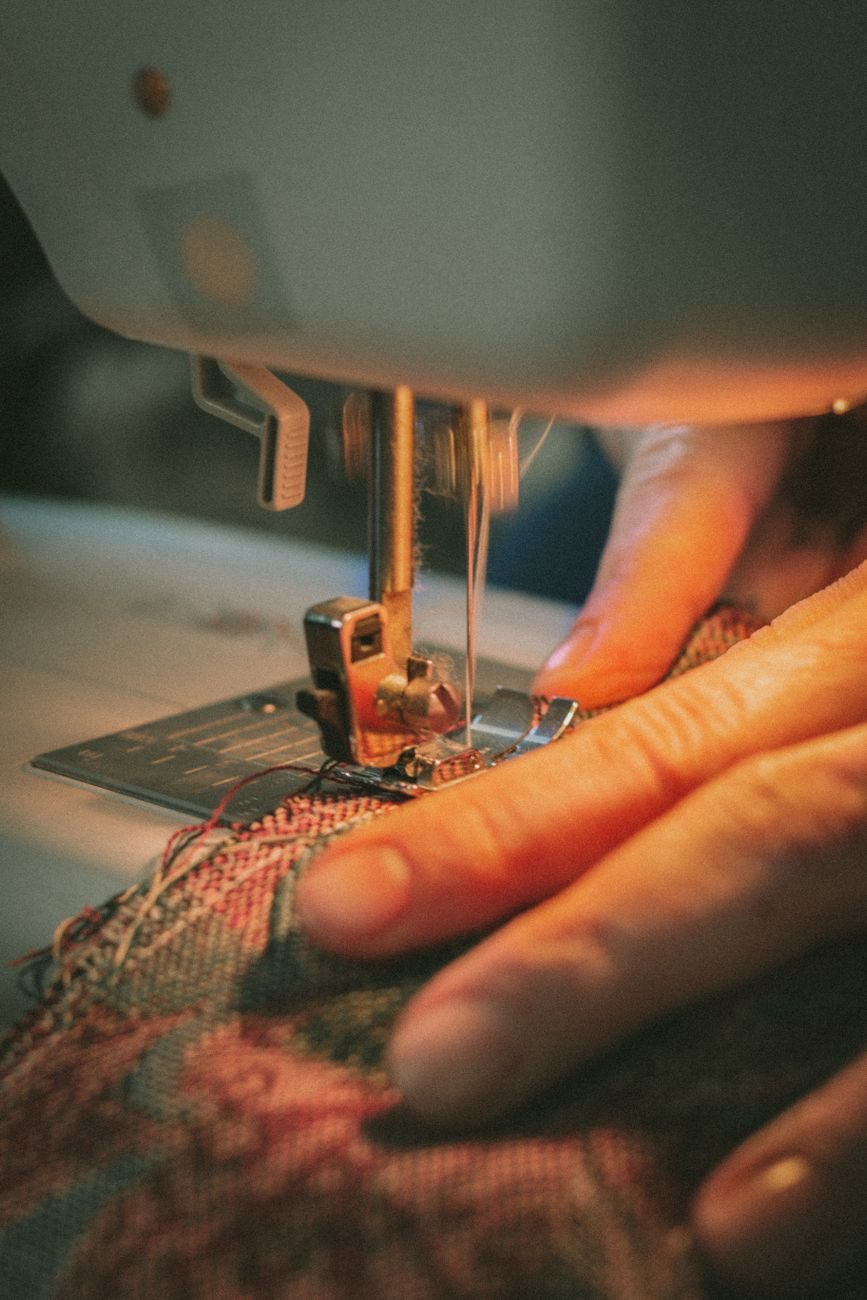
This is the part most articles about neoprene skip entirely, probably because they’re written for factories instead of home sewing rooms. The good news is that a regular home sewing machine can absolutely handle neoprene, you don’t need anything industrial. For needles, most sewists reach for a stretch or ballpoint needle in a size 90/14, since it glides through the knit facing without shredding it, though a heavier project with thicker neoprene may do better with a jeans or denim needle. Set your stitch length a bit longer than you would for quilting cottons, somewhere around 3 to 3.5mm, since a short stitch can perforate the foam core and weaken the seam. Pins are generally a bad idea because they leave permanent holes in the foam, so most sewists switch to sewing clips to hold seams together instead, the same clips a lot of quilters already own for binding. For seam finishing, neoprene doesn’t fray, so many projects skip a traditional seam finish altogether and instead topstitch the seam allowance flat, which also helps it lie smooth under a lightweight presser foot. If your machine has a walking foot, this is a great project to use it on, since it helps feed the thicker layers evenly and keeps both layers moving together instead of shifting apart. Pressing neoprene is a bit different too, a warm iron on a low setting with a pressing cloth in between works far better than high heat, since too much direct heat can damage the bond between the rubber core and the fabric facing, and most sewists finger-press seams open instead of using an iron at all whenever possible.
If all this has you curious about working with neoprene fabric for your next project, stop by Bee’s Quilt Shop and Studio at 1975 Old Moultrie Road in St. Augustine, FL, or browse our fabric collection online to see what’s currently in stock. Our team has been helping local sewists and quilters pick the right fabric for the job since 2013, and between us we’ve got 75 years of combined sewing and quilting experience to draw on. Come feel a few different weights of neoprene in person, ask us your questions, and check out our full range of designer fabrics and notions while you’re here.
Frequently Asked Questions
Can a regular home sewing machine actually sew neoprene fabric?
Yes, in most cases a standard home sewing machine handles neoprene fabric just fine, especially in lighter to mid weights. The key is using the right needle, usually a stretch or ballpoint style, and a slightly longer stitch length so you’re not overworking the foam core.
Is neoprene hard to work with for a beginner?
It’s less intimidating than it looks, especially if you’ve already sewn with knits or fleece before. Many sewists find that once they switch from pins to clips and slow down slightly while sewing, neoprene behaves in a fairly predictable, forgiving way.
Does neoprene fabric stretch or shrink?
Neoprene fabric has some stretch built into it, mostly from the fabric facing rather than the rubber core itself, though it’s generally more stable than a jersey knit. It doesn’t shrink the way natural fiber fabrics can in the wash, but most people avoid high heat with it since heat can affect the bond between the rubber core and the fabric facing.
How do you clean neoprene fabric?
In our experience, hand washing in cool water with a mild detergent is the safest way to clean neoprene, followed by air drying flat away from direct heat. If you’re working with a finished piece rather than yardage, it’s worth checking whether it was bonded with a heat-sensitive adhesive before you ever put it in a dryer, since high heat is really the main thing to avoid.
Is neoprene fabric the same thing as wetsuit material?
Wetsuit material is neoprene fabric, but not all neoprene fabric is meant for wetsuits. Wetsuit-grade neoprene is usually a specific mid to heavy weight chosen for water performance, while the neoprene you’ll find at a fabric shop like Bee’s Quilt Shop and Studio comes in a range of weights and finishes meant for fashion, accessories, and craft projects rather than swimming.
This article is intended for general educational and informational purposes only, based on common sewing practices and the hands-on experience of our staff at Bee’s Quilt Shop and Studio. Fabric behavior can vary between manufacturers, dye lots, and finishes, so we recommend testing on a scrap piece before starting a full project, and consulting your sewing machine’s manual for guidance specific to your equipment.